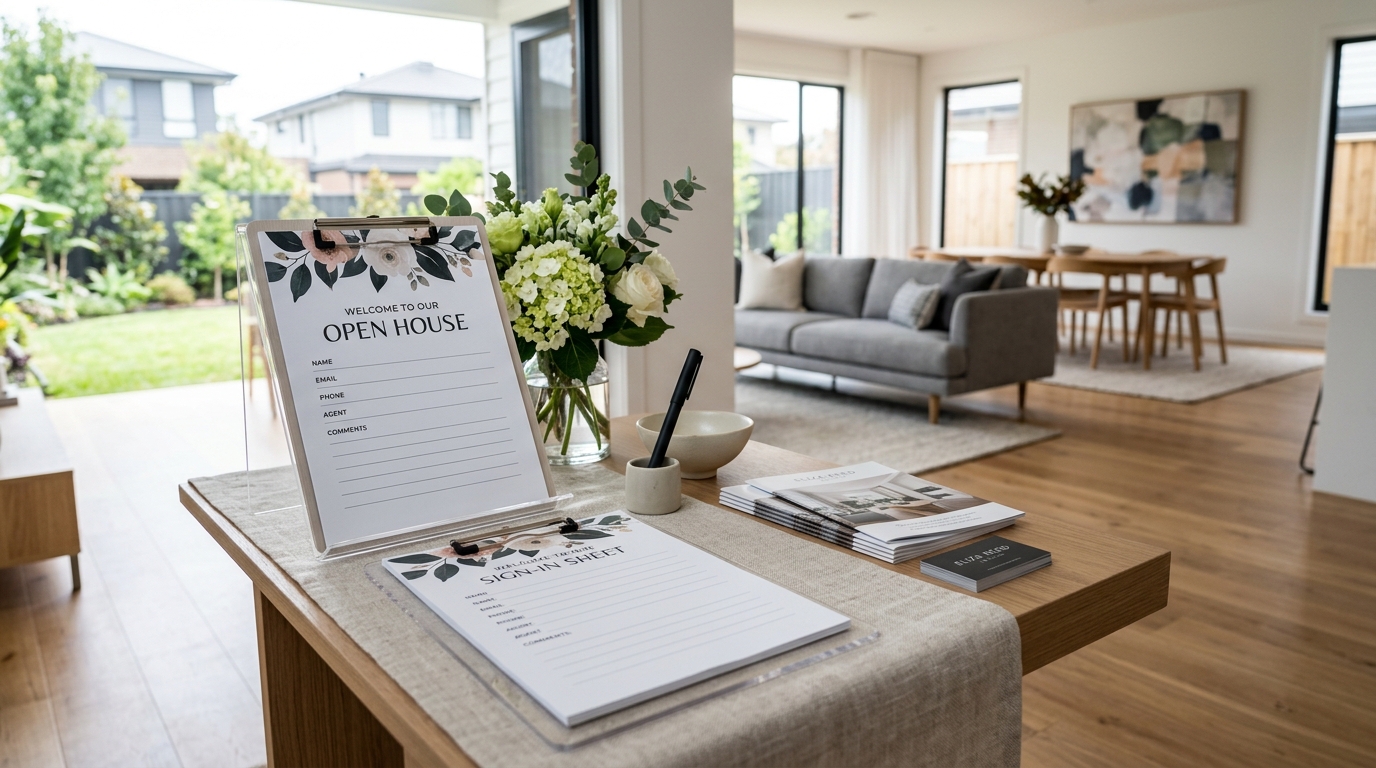
Most real estate agents treat the open house sign-in sheet as an afterthought—a plain clipboard sitting on a folding table near the door. But here's the truth: your open house sign-in sheet design is one of the most powerful first impressions you can make. Before buyers have toured the kitchen, admired the backyard, or asked a single question, they've already formed an opinion of you based on the materials you've placed in front of them. A well-designed, branded sign-in sheet signals professionalism, builds instant credibility, and dramatically increases the likelihood that visitors will share their real contact information. In this guide, we'll walk through 9 design strategies that transform this overlooked tool into a genuine buyer-winning asset.
First impressions at open houses are formed within 7 seconds. Your sign-in station is often the very first thing buyers interact with—make it count.
1. Lead With a Branded, Professional Header
The top of your sign-in sheet should feature your professional headshot, full name, brokerage logo, and contact information. This isn't vanity—it's strategy. When buyers see a polished, consistent brand identity, they immediately associate it with competence and trustworthiness. Use a high-resolution headshot (not a phone selfie) and ensure your logo is crisp and properly sized. If your brokerage has brand color guidelines, follow them here. Consistency between your sign-in sheet, business cards, and online listings reinforces your professional identity at every touchpoint.
2. Feature a Magazine-Quality Property Photo
Nothing communicates the value of a property faster than a stunning photograph. Place a hero image of the home's best feature—whether that's a beautifully staged living room, a dramatic exterior shot, or a twilight photo with glowing lights—prominently at the top of your sign-in sheet. Buyers who are emotionally engaged with the property are far more likely to leave their real contact information. If your listing photos need a refresh, PropStage.ai's Open House Hero Shot Creator can transform any property photo into a magazine-quality image in seconds—perfect for printing on your sign-in materials.
3. Write a Compelling Property Headline
Below your hero image, include a short benefit-driven headline that captures the property's most compelling selling points. Think: 'Stunning 4BR Craftsman with Chef's Kitchen & Panoramic Views' rather than just the address. This headline serves double duty: it reinforces the emotional appeal of the property and gives buyers a memorable hook to associate with the home after they've visited several listings that day. Keep it to one or two lines and use a font size that's easy to read at a glance.
4. Minimize Form Fields to Reduce Friction
One of the most common mistakes agents make is asking for too much information upfront. Long forms feel invasive and signal that you're collecting data rather than building a relationship. Limit your required fields to: full name, phone number, email address, and one strategic qualifying question such as 'Are you currently working with an agent?' or 'What's your target move-in timeline?' That single qualifying question gives you invaluable lead intelligence without overwhelming visitors. Optional fields can include home search criteria or preferred contact method.
5. Add a QR Code for Digital Engagement
A well-placed QR code on your sign-in sheet serves multiple purposes. It can link to the full online listing with additional photos, a virtual tour, a neighborhood guide, or even a digital sign-in form for buyers who prefer not to write by hand. QR codes also appeal strongly to millennial and Gen Z buyers who are accustomed to digital-first interactions. Use a QR code generator to create a clean, scannable code and label it clearly: 'Scan for the full photo gallery & virtual tour.' This small addition dramatically increases digital engagement with your listing.
6. Offer a Clear Value Incentive for Signing In
Give buyers a reason to share their information beyond mere obligation. Include a line on your sign-in sheet that reads: 'Sign in today and receive our free [Neighborhood Market Report / First-Time Buyer Guide / Home Valuation Guide].' This positions your sign-in sheet as a value exchange rather than a data grab. Buyers feel they're getting something useful in return, which increases both completion rates and the quality of the information they provide. It also gives you a natural, non-pushy reason to follow up: delivering the promised resource.
7. Match the Design Aesthetic to the Property Style
A modern minimalist condo deserves a sign-in sheet with clean lines, sans-serif fonts, and a monochromatic color palette. A warm family home calls for softer tones, rounded elements, and inviting typography. Matching your design aesthetic to the property style creates a cohesive brand experience that reinforces the home's identity in buyers' minds. It also demonstrates your attention to detail—a quality every buyer wants in their agent. Consider creating 2-3 design templates for different property types so you're always prepared with an on-brand option.
8. Create a Professional, Branded Sign-In Station
The physical presentation of your sign-in area matters just as much as the sheet itself. Use a branded easel, a clean clipboard with a quality pen, and a small display of property brochures and business cards. Add a welcome card that says 'Thank you for visiting [Address]. We're so glad you're here!' to create a warm, hospitality-driven atmosphere. PropStage.ai's Open House Welcome & Sign-In Poster makes it easy to create a stunning, branded welcome display that completes your sign-in station and reinforces your professional image the moment buyers walk through the door.
9. Design for Fast, Personalized Follow-Up
The best sign-in sheet design in the world is worthless without a follow-up system. Build your sheet with follow-up in mind: include a column for agent notes (added after the visitor leaves) where you can jot down details like 'interested in the backyard' or 'asked about school district.' These notes allow you to send hyper-personalized follow-up messages within 24 hours that reference specific things the buyer mentioned or seemed interested in. Buyers are consistently impressed when agents remember the details—and it sets you apart from every other agent they met that weekend.
Bring It All Together With the Right Tools
A well-designed open house sign-in sheet is just one piece of a winning open house strategy. The property photos you feature on that sheet—and throughout your marketing materials—need to be equally impressive. PropStage.ai gives real estate agents the AI-powered tools to produce stunning, professional-quality listing visuals in seconds, without expensive photographers or lengthy editing workflows. From hero shots and twilight conversions to fully staged interiors, you can elevate every visual touchpoint of your open house experience. Use the Property Flyer & Brochure Creator to create matching print materials that carry your brand identity from the sign-in sheet all the way through to the follow-up package.
Final Thoughts: Small Details, Big Results
In a competitive real estate market, the agents who win are those who obsess over every detail of the buyer experience—including the humble sign-in sheet. By applying these 9 open house sign-in sheet design principles, you'll capture more leads, make stronger first impressions, and position yourself as the kind of professional buyers want to work with. Pair your upgraded sign-in materials with PropStage.ai's suite of AI-powered visual tools and you'll have a complete, polished open house presence that stands out from the very first moment buyers arrive.