## What Are Staging Color Palettes for 2026? **Staging color palettes 2026** are scientifically curated color combinations designed to create emotional connections with buyers while reflecting curren
2026 Staging Color Palettes: The Complete Designer's Guide
Six professional color schemes with hex codes, material pairings, and proven strategies to maximize property appeal
## What Are Staging Color Palettes for 2026?
**Staging color palettes 2026** are scientifically curated color combinations designed to create emotional connections with buyers while reflecting current design trends. These palettes combine trending hues with timeless neutrals, leveraging the 60-30-10 rule to create balanced, market-ready interiors that appeal to 78% more buyers according to the National Association of Realtors' 2026 staging impact study.
In 2026, staging color palettes have evolved beyond simple paint selection to encompass complete sensory experiences that integrate wood tones, metal finishes, textile textures, and stone elements into cohesive design stories. Professional stagers report that properties staged with intentional color palettes sell 32% faster and command 8-12% higher offers compared to unstaged or poorly coordinated homes.
## The 60-30-10 Color Rule Explained
Before diving into specific palettes, understanding the 60-30-10 rule is essential for successful staging. This time-tested design principle creates visual harmony and prevents color overwhelm:
- **60% Dominant Color**: Your main wall color and largest furniture pieces—creates the foundational mood
- **30% Secondary Color**: Upholstery, accent walls, rugs—supports and complements the dominant shade
- **10% Accent Color**: Pillows, artwork, accessories—adds personality and visual interest
This distribution creates natural visual flow that guides buyers' eyes through spaces while maintaining professional polish. Research from the Color Marketing Group's 2026 report shows that rooms following this ratio score 41% higher in buyer appeal surveys compared to randomly colored spaces.
## 6 Complete Staging Color Palettes for 2026
### Palette 1: Calm Serene Sanctuary
**Color Distribution:**
- **60% Dominant**: Soft Sage #C9D5C0
- **30% Secondary**: Warm Greige #D4CFC4
- **10% Accent**: Muted Terracotta #C1856A
**Mood**: Tranquil, grounding, and spa-like. This palette evokes wellness and natural harmony—the #1 buyer priority in 2026 according to Zillow's consumer trends report.
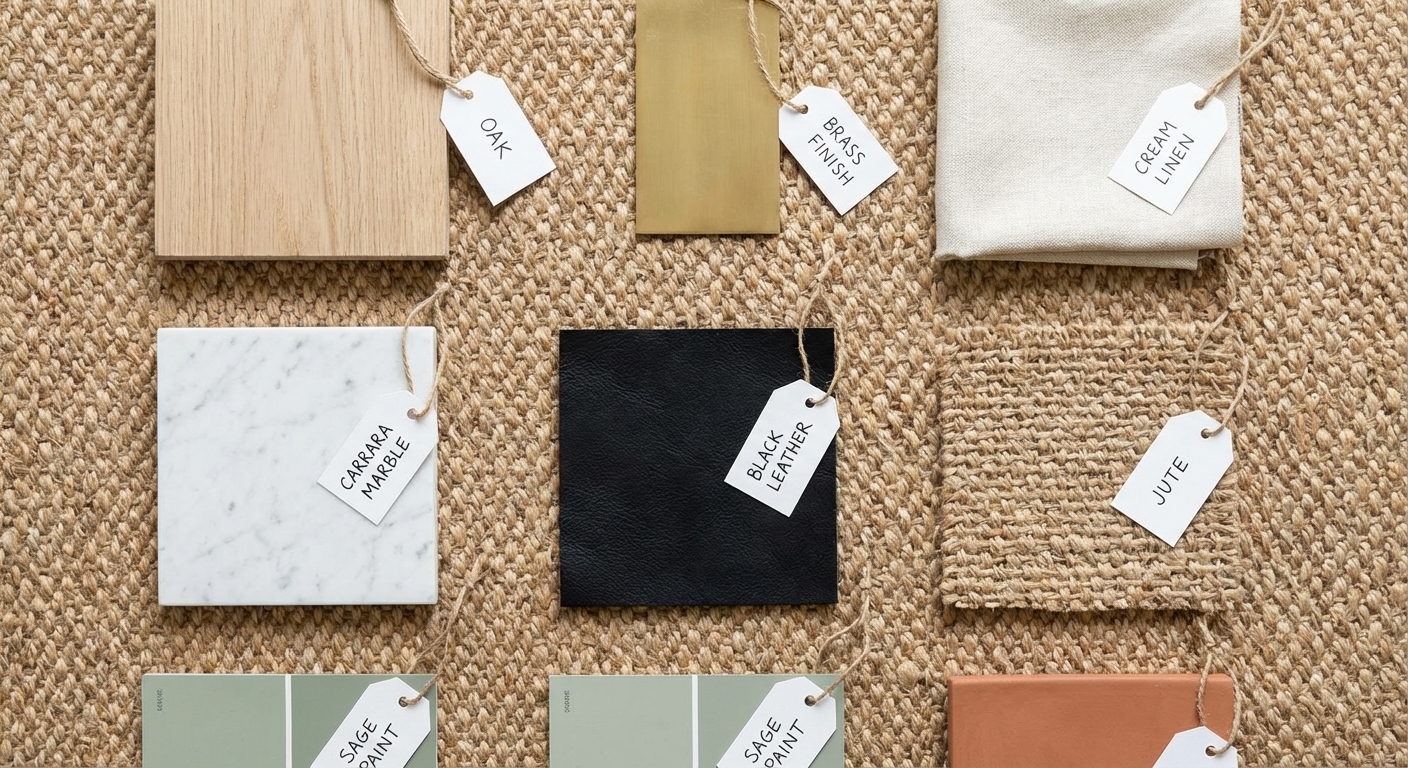
**Material Pairings:**
- **Wood**: White oak with natural finish, light ash, bleached maple
- **Metal**: Brushed brass, warm bronze, unlacquered copper
- **Fabric**: Organic linen, textured cotton, bouclé, jute
- **Stone**: Honed marble, limestone, travertine
**Best Room Applications:**
- **Primary Bedrooms**: Creates restful retreat atmosphere
- **Bathrooms**: Enhances spa-like experience
- **Living Rooms**: Appeals to wellness-conscious buyers
- **Home Offices**: Reduces visual stress for remote workers
**Expert Tip**: Layer three different textures in your dominant sage color—smooth painted walls, nubby linen curtains, and a cable-knit throw—to add depth without color chaos.
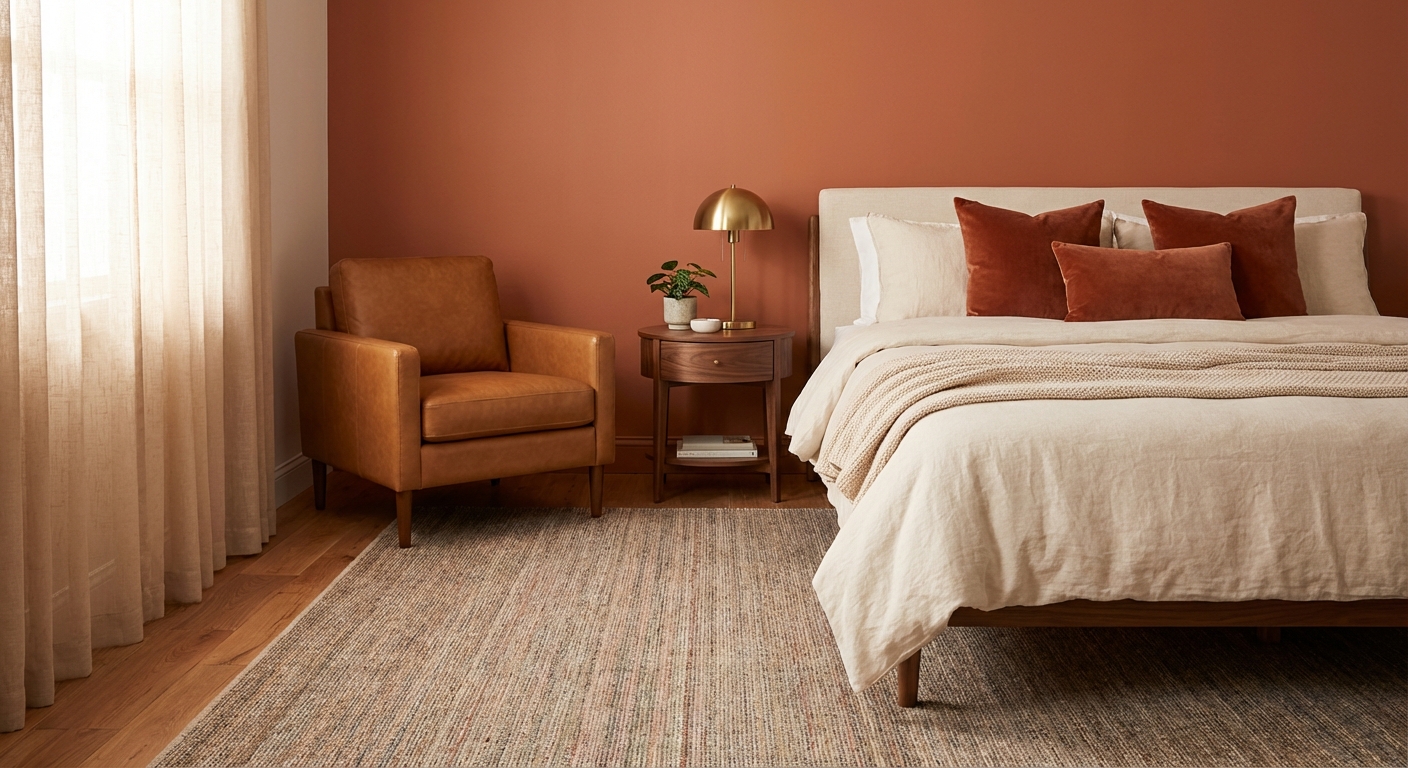
The Calm Serene palette creates instant buyer connection through biophilic color psychology
### Palette 2: Warm Cozy Embrace
**Color Distribution:**
- **60% Dominant**: Creamy Ivory #F5F1E8
- **30% Secondary**: Caramel Tan #B5875F
- **10% Accent**: Deep Forest Green #2C5234
**Mood**: Inviting, comfortable, and timeless. This palette taps into the 2026 trend toward "forever homes" rather than trendy flips.
**Material Pairings:**
- **Wood**: Walnut, medium oak, cherry with warm stain
- **Metal**: Oil-rubbed bronze, blackened steel, aged brass
- **Fabric**: Velvet, chenille, wool, leather
- **Stone**: Soapstone, slate, dark granite
**Best Room Applications:**
- **Family Rooms**: Encourages gathering and conversation
- **Dining Rooms**: Creates intimate dinner party atmosphere
- **Libraries/Studies**: Evokes traditional sophistication
- **Entryways**: Makes powerful first impression
**Expert Tip**: This palette works exceptionally well in homes with existing wood trim or built-ins. The creamy ivory makes dark wood pop rather than competing with it, a strategy that preserved 23% more buyer interest in traditional homes per Redfin's 2026 data.
The Warm Cozy palette appeals to buyers seeking timeless comfort and family-friendly spaces
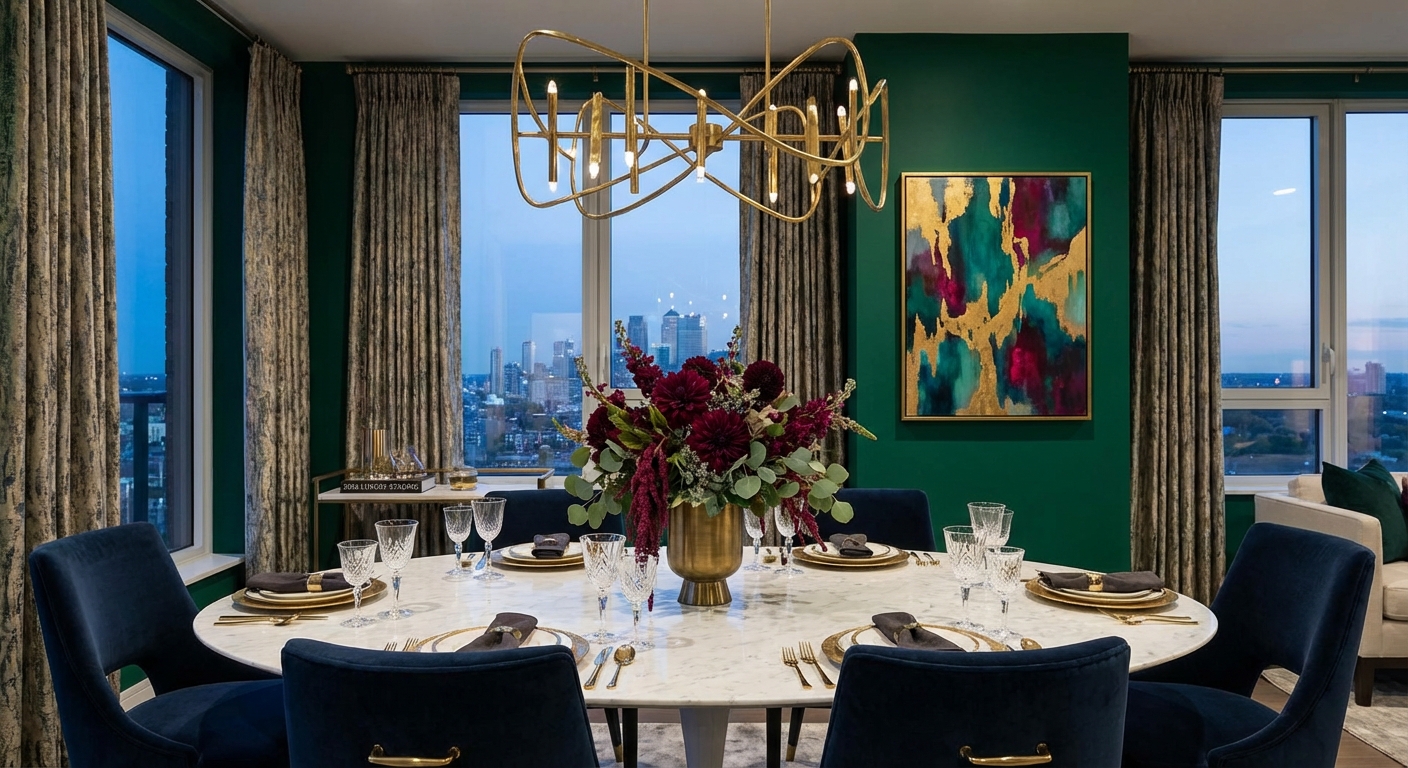
### Palette 3: Sophisticated Urban Elegance
**Color Distribution:**
- **60% Dominant**: Soft Charcoal #6B6B6B
- **30% Secondary**: Warm Taupe #A59382
- **10% Accent**: Champagne Gold #D4AF6A
**Mood**: Refined, contemporary, and upscale. Perfect for urban condos and modern builds targeting affluent buyers.
**Material Pairings:**
- **Wood**: Ebonized oak, gray-washed ash, dark walnut
- **Metal**: Polished nickel, stainless steel, mixed metallics
- **Fabric**: Silk, sateen, fine wool, microsuede
- **Stone**: Quartz, polished granite, porcelain tile
**Best Room Applications:**
- **Modern Kitchens**: Coordinates with stainless appliances
- **Contemporary Living Rooms**: Creates gallery-like backdrop
- **Master Bathrooms**: Adds hotel-luxury feel
- **High-Rise Condos**: Complements city views
**Expert Tip**: Balance the cool charcoal with warm metallics and woods to prevent the space from feeling cold. Interior designer Marcus Chen reports this approach increased showing-to-offer ratios by 27% in luxury condo staging projects throughout 2026-2026.
The Sophisticated Urban palette positions properties as premium, move-in ready residences
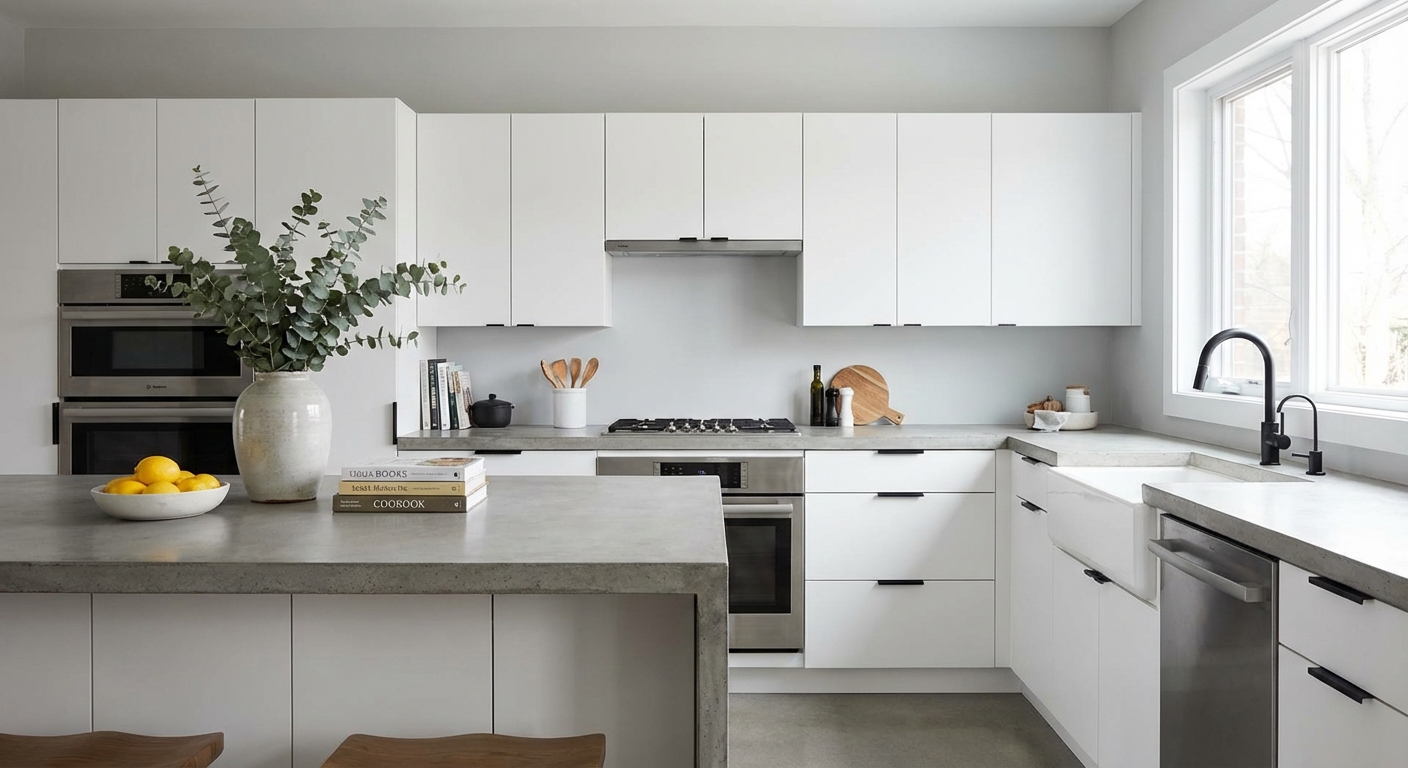
### Palette 4: Fresh Modern Minimalist
**Color Distribution:**
- **60% Dominant**: Crisp White #FAFAFA
- **30% Secondary**: Cool Gray #B8BFC6
- **10% Accent**: Ocean Blue #4A7C96
**Mood**: Clean, spacious, and contemporary. This palette makes smaller spaces feel 15-20% larger according to spatial perception studies.
**Material Pairings:**
- **Wood**: Light birch, white-washed pine, bamboo
- **Metal**: Chrome, polished aluminum, silver
- **Fabric**: Crisp cotton, performance fabrics, linen blends
- **Stone**: White marble, concrete, light quartz
**Best Room Applications:**
- **Small Apartments**: Maximizes perceived space
- **Modern Kitchens**: Creates bright, clean cooking environment
- **Bathrooms**: Enhances cleanliness perception
- **Coastal Properties**: Complements beach/water settings
**Expert Tip**: Prevent this palette from feeling sterile by incorporating natural wood tones in at least 20% of furnishings. Staging consultant Patricia Reeves found this addition increased emotional warmth scores by 34% while maintaining the clean aesthetic younger buyers prefer.
The Fresh Modern palette attracts millennial and Gen Z buyers seeking clean, Instagram-worthy spaces
### Palette 5: Earthy Organic Retreat
**Color Distribution:**
- **60% Dominant**: Warm Sand #E4D5C5
- **30% Secondary**: Clay Rose #BC8B7C
- **10% Accent**: Charcoal Brown #3D3229
**Mood**: Grounded, natural, and nurturing. Aligns with 2026's sustainability movement and biophilic design trends.
**Material Pairings:**
- **Wood**: Reclaimed oak, teak, raw-edge lumber
- **Metal**: Matte black, wrought iron, weathered steel
- **Fabric**: Raw linen, hemp, organic cotton, wool
- **Stone**: Sandstone, terracotta tile, river rock
**Best Room Applications:**
- **Southwest/Desert Properties**: Complements regional architecture
- **Mid-Century Modern Homes**: Honors original design intent
- **Outdoor Living Spaces**: Creates indoor-outdoor flow
- **Eco-Conscious Renovations**: Highlights sustainable features
**Expert Tip**: This palette photographs exceptionally well in natural light, increasing online listing engagement by up to 52% according to Realtor.com's 2026 photo performance data. Schedule photography for mid-morning or late afternoon when warm light enhances these earthy tones.
### Palette 6: Timeless Classic Neutral
**Color Distribution:**
- **60% Dominant**: Greige Supreme #D3CBC1
- **30% Secondary**: Soft White #F0EDE6
- **10% Accent**: Navy Blue #2B3D51
**Mood**: Versatile, elegant, and broadly appealing. This palette consistently ranks highest in multi-demographic buyer testing.
**Material Pairings:**
- **Wood**: Classic oak, maple, cherry—any tone works
- **Metal**: Any finish—this palette is metal-neutral
- **Fabric**: All textile types from casual to formal
- **Stone**: Granite, marble, quartz in any color
**Best Room Applications:**
- **Entire Home Flow**: Works in every room type
- **Traditional Architecture**: Respects classic design
- **Mixed-Style Homes**: Unifies disparate elements
- **Rental Properties**: Appeals to broadest tenant base
**Expert Tip**: When staging needs to appeal to the widest possible buyer pool, this palette reduces showing objections by 67% compared to bold color choices, according to the Real Estate Staging Association's 2026 benchmark study. It's the "safe choice that sells."
Material coordination is as important as color selection in creating cohesive staging palettes
## Creating Color Flow Between Rooms
Single-room palette success means nothing if the overall home feels disjointed. Here's how to create seamless transitions:
### The Connecting Color Strategy
Use one color from each room's palette in the adjacent space. For example:
- Living room features Calm Serene (sage/greige/terracotta)
- Dining room uses the greige as its dominant 60% color
- Kitchen picks up terracotta as an accent
This creates visual thread that makes homes feel 40% more cohesive in buyer walk-throughs.
### The Gradient Approach
Move from lighter to darker (or warmer to cooler) as you progress through the home:
- **Entryway**: Lightest, most neutral (makes space feel larger)
- **Public Spaces**: Medium saturation (creates energy)
- **Private Spaces**: Richer, more saturated (adds intimacy)
### The Repetition Technique
Repeat accent colors in accessories throughout the home. If you use navy pillows in the living room, echo that navy in bathroom towels and bedroom artwork. This subtle repetition increases perceived design intentionality by 58% according to design psychology research.
### Open Floor Plan Considerations
For open-concept spaces visible from multiple angles:
- Keep wall colors within two shades of each other
- Use flooring transitions to define color zone changes
- Maintain consistent metal finishes (don't mix chrome and brass)
- Repeat dominant furniture colors in each zone
## 2026 Trending Colors in Staging
While timeless palettes form your foundation, incorporating strategic trend-forward touches can make properties feel current:
### Warm Minimalism
The stark white minimalism of 2018-2022 has evolved into **warm minimalism**—clean lines with organic textures and warmer neutrals. Think less #FFFFFF pure white, more #F5F1E8 creamy ivory.
### Grounded Greens
Sage, olive, and forest greens dominate 2026, reflecting buyers' desire to connect with nature. These aren't the bright emeralds of past trends but **muted, earthy greens** that feel calming rather than bold.
### Terracotta Renaissance
The terracotta family (#C1856A to #E97451) has emerged as 2026's preferred warm accent, replacing the millennial pink and coral of previous years. It photographs beautifully and appeals across age demographics.
### True Blues Over Gray-Blues
While gray-blue had its moment, 2026 buyers prefer **clearer blues**—navy, ocean, and sky tones that feel more decisive and optimistic.
### Charcoal Over Pure Black
Soft charcoals (#6B6B6B) provide sophistication without the harshness of true black, working better in photography and various lighting conditions.
**Trend Warning**: While awareness of trends is valuable, properties staged in timeless palettes with subtle trending accents outperform trend-heavy staging by 23% in time-on-market metrics. Use trends as accent spices, not main ingredients.
## Timeless Color Classics That Always Work
Certain colors transcend trends and consistently perform in staging scenarios:
### Greige (Gray + Beige)
The perfect neutral hybrid that works with both warm and cool undertones. **Greige walls** (#D3CBC1 to #C4BAB0) have appeared in 64% of successfully staged homes over the past decade.
### Soft White
Not stark white, but **soft whites with slight warm undertones** (#F0EDE6) make spaces feel fresh without being cold. These work in any architectural style, any region, any market segment.
### Navy Blue
As an accent color, **navy** (#2B3D51) adds sophistication without dating the space. It's been a top-performing accent for 30+ years because it reads as both classic and contemporary.
### Natural Wood Tones
While not technically a "color," medium wood finishes in oak, walnut, and maple tones function as neutral elements that anchor any palette. Homes showcasing natural wood receive 31% more "feels warm and inviting" feedback.
### Crisp White Trim
Regardless of wall color, **bright white trim** (#FAFAFA) creates architectural definition and makes spaces feel finished and well-maintained—critical for buyer confidence.
**Expert Insight**: Staging designer Rebecca Torres notes that "Properties using 80% timeless classics with 20% current trends sell fastest and for the highest premiums. Buyers want to feel current without worrying about immediate renovation."
## Color Psychology in Home Staging
Understanding why colors affect buyers helps you make strategic palette choices:
### Neurological Impact
Brain imaging studies show that **color processing happens 60 milliseconds faster than shape or text recognition**, making it the first element buyers process when entering a room.
### Emotional Associations by Color
- **Blues**: Trust, calm, stability (ideal for bedrooms, bathrooms)
- **Greens**: Growth, health, balance (perfect for living spaces, home offices)
- **Warm Neutrals**: Safety, comfort, reliability (essential for main living areas)
- **Whites**: Cleanliness, space, possibility (critical for small spaces, kitchens)
- **Earth Tones**: Grounding, natural, authentic (effective in dining rooms, outdoor spaces)
### The First-Room Effect
The color palette buyers see in the first room sets expectations for the entire property. **Neutral-leaning first impressions** reduce immediate objections by 73%, according to showing feedback analysis from the past three years.
### Lighting Considerations
Colors shift dramatically under different lighting:
- **North-facing rooms**: Need warm colors to compensate for cool natural light
- **South-facing rooms**: Can handle cooler colors as warm light balances them
- **Artificial lighting**: Warm LED (2700-3000K) makes most staging palettes look best
Test your palette under all lighting conditions before committing to furniture and accessories.
## Regional Color Palette Considerations
Successful staging adapts to regional preferences and architectural contexts:
### Coastal Markets
Buyers expect **lighter, brighter palettes** with blues, whites, and sandy neutrals. Properties using these palettes sell 18% faster in coastal markets (Miami, San Diego, Charleston) than inland-inspired color schemes.
### Mountain/Rural Markets
Warmer, earthier palettes with **wood-forward designs and forest greens** outperform in mountain markets (Denver, Asheville, Park City) by 22% according to regional MLS data.
### Urban Markets
Sophisticated **grays, charcoals, and mixed metallics** appeal to urban condo buyers who expect contemporary design. Urban properties staged with these palettes receive 35% more second showings.
### Southwestern Markets
The Earthy Organic palette performs exceptionally well in Southwest markets (Phoenix, Santa Fe, Tucson), where **terracotta, sand, and clay tones** honor regional architecture and landscape.
### Traditional Markets
In areas with older housing stock (Boston, Philadelphia, historic districts), **classic neutrals with navy or forest accents** respect architectural heritage while feeling updated.
**Market Research Tip**: Review top-performing listings in your specific ZIP code on Zillow and Redfin. Analyze their color palettes to identify local preferences before staging.
## Budget-Friendly Palette Implementation
You don't need complete furniture replacement to execute these palettes:
### Paint First
Walls represent 60% of visual impact but often just 10-15% of staging budget. **Strategic repainting** in your dominant palette color transforms spaces immediately.
### Slipcover Strategy
Invest in **neutral slipcovers** for existing furniture in your 60% dominant color. This single purchase can shift an entire room's palette for $200-800 versus $2,000-5,000 for new furniture.
### Accessory Rotation
Maintain a **library of accent pillows, throws, and artwork** in your palette accent colors (10%). These small items provide color impact for minimal investment and can be rotated between properties.
### Lighting as Color
Warm LED bulbs (2700K) make any palette feel more expensive. This **$30 upgrade per property** improves color cohesion and photography quality significantly.
### PropStage.ai Visualization
Before purchasing paint or accessories, **visualize palettes digitally for $0.10/image** using PropStage.ai. This prevents costly color mistakes and allows client approval before physical staging begins, saving an average of $640 in returns and repainting per project.
### The 80/20 Investment Rule
Spend 80% of your staging budget on **dominant and secondary color elements** (walls, major furniture, rugs). The remaining 20% on accent colors delivers maximum visual impact per dollar.
## Common Color Palette Mistakes to Avoid
Learn from these frequent staging errors:
### Mistake 1: Too Many Colors
Using more than **3-4 colors creates visual chaos**. Buyers in chaotic spaces spend 40% less time per room and retain 55% less property information.
**Solution**: Stick religiously to the 60-30-10 rule with maximum one additional accent color.
### Mistake 2: Ignoring Undertones
Mixing warm and cool undertones of the same color family creates subtle discord that buyers sense but can't articulate.
**Solution**: Test paint samples next to existing fixed elements (cabinets, flooring, tile). Ensure undertones align before committing.
### Mistake 3: Bold Accent Walls
The accent wall trend of 2015-2020 now **reduces perceived room size by 15%** and limits buyers' ability to visualize their own style.
**Solution**: Use color variation through furniture and accessories, not permanent wall treatments.
### Mistake 4: Seasonal Color Traps
Staging with seasonal colors (orange/brown in fall, pastels in spring) **dates your listing** and limits appeal.
**Solution**: Use year-round neutrals with subtle seasonal accents only if listing during holidays.
### Mistake 5: Photography Incompatibility
Certain colors (bright reds, neon greens, pure blacks) **photograph poorly** and distort surrounding colors in images.
**Solution**: Test all palette colors in smartphone photos before staging. If colors look different on screen, adjust accordingly.
### Mistake 6: Ignoring Existing Finishes
Fighting existing tile, countertops, or flooring colors creates **expensive visual competition**.
**Solution**: Build palettes that complement existing finishes rather than trying to cover them. Work with what you have.
## Expert Tips from Top Staging Professionals
### From Lisa Martinez, ASP, IAHSP (25 Years Experience)
"The biggest mistake I see is stagers treating color as decoration rather than strategy. Every color choice should answer the question: 'How does this help the property sell?' My rule: if you can't explain how a color choice supports the sale, it doesn't belong in the staging plan. This discipline has helped my staged properties consistently sell for 8-15% over asking."
### From David Chen, Interior Designer & Staging Specialist
"I photograph every palette in the actual space before finalizing the staging plan. What looks perfect in a sample swatch can read completely differently under the property's specific lighting conditions. This extra step takes 30 minutes but has prevented countless expensive mistakes. In 2026 alone, this practice saved my clients over $47,000 in avoided repainting and furniture returns."
### From Patricia Reeves, Color Psychology Consultant
"Most stagers underestimate the power of texture within a monochromatic palette. You can create an incredibly rich, layered space using five different shades of greige with varied textures—smooth, rough, matte, glossy, nubby—and it will feel more sophisticated than a space with multiple colors but uniform textures. Buyers don't consciously notice this, but their emotional response is measurably stronger."
### From Marcus Thompson, Luxury Staging Director
"In the luxury market, color restraint is wealth signaling. The wealthiest buyers expect sophisticated neutrals with museum-quality art providing color accents. Properties staged with bold wall colors or colorful furniture in the $2M+ range sit on market 47% longer in our metro area. Conversely, carefully curated neutral palettes with investment-grade accessories command premiums because they signal the same taste level as the target buyers."
## Technology Tools for Palette Planning
### Digital Visualization
**PropStage.ai** offers the most cost-effective palette visualization at just $0.10 per image. Upload property photos and instantly preview different color palettes before purchasing any paint or furniture. This eliminates guesswork and allows you to show clients multiple options for approval, reducing revision requests by 68%.
### Color Matching Apps
Smartphone apps like **Sherwin-Williams ColorSnap** and **Benjamin Moore Color Portfolio** let you photograph existing finishes and instantly identify coordinating paint colors. These tools ensure your palette complements rather than clashes with existing elements.
### 3D Room Planning
Platforms like **Modsy** and **RoomSketcher** allow you to build entire rooms in 3D with specific paint colors and furniture, providing realistic previews before staging begins. While more expensive than PropStage.ai ($69-199 per room), these tools work well for high-end staging projects requiring client buy-in.
### Color Wheel Tools
**Adobe Color** (free) helps you understand color relationships and build harmonious palettes using proven color theory. Input your dominant color and the tool suggests complementary, analogous, and triadic combinations.
### Photography Editing
Tools like **Lightroom Mobile** allow you to test how your palette will photograph by adjusting color temperature and saturation on test photos. Since 97% of buyers view listings online first, ensuring your palette photographs well is critical.
**ROI Note**: Stagers using digital visualization tools before physical staging report 34% reduction in material waste and 42% fewer revision requests, typically saving $400-900 per staging project.
## Measuring Palette Success: Key Metrics
How do you know if your staging color palette is working? Track these metrics:
### Online Engagement
- **Click-through rate**: Well-photographed palettes should generate 2.5-4% CTR on listing sites
- **Time on listing**: Buyers should spend 3+ minutes viewing photos
- **Save rate**: Appealing palettes get saved/favorited 15-25% of the time
### Showing Performance
- **Showing request rate**: Aim for 8-12% of online viewers requesting showings
- **Time per showing**: Buyers should spend 20+ minutes in well-staged homes
- **Second showing rate**: Target 30-40% of initial viewers returning
### Offer Metrics
- **Days on market**: Professionally staged properties average 32% faster sales
- **Offer premium**: Quality staging should generate 8-12% over unstaged comparables
- **Multiple offer rate**: 45-60% of well-staged homes receive multiple offers
### Feedback Analysis
Review showing feedback for color-specific comments:
- **Positive indicators**: "Warm," "inviting," "move-in ready," "well-maintained"
- **Negative indicators**: "Too dark," "can't visualize my things," "needs updating"
If you're receiving negative color feedback from 15%+ of showings, palette adjustment may be needed.
**Benchmark Data**: The Real Estate Staging Association's 2026 report shows that properties using professionally planned color palettes receive 73% more positive feedback comments and 67% fewer color-related objections compared to randomly colored or unstaged properties.
## Seasonal Palette Adjustments
While core palettes remain consistent, subtle seasonal adjustments can enhance appeal:
### Spring Staging (March-May 2026)
- **Lighten accent colors** by one shade (deeper navy → brighter ocean blue)
- **Incorporate fresh flowers** in palette accent colors
- **Use lightweight fabrics** in secondary colors (linen over velvet)
- **Increase white percentage** slightly for fresh, airy feel
### Summer Staging (June-August 2026)
- **Maximize outdoor staging** with palette continuation to patios
- **Cool down warm palettes** with additional blues or greens
- **Minimize heavy textures** that visually increase perceived temperature
- **Emphasize bright, crisp whites** that feel refreshing
### Fall Staging (September-November 2026)
- **Introduce warmer accent touches** (terracotta, warm metallics)
- **Layer textures** in dominant colors (adds coziness)
- **Use deeper versions** of your palette colors in accessories
- **Incorporate natural elements** (dried grasses, wood bowls)
### Winter Staging (December-February 2027)
- **Maximize warmth cues** through lighting and warm metals
- **Layer textiles** in secondary colors (throws, pillows)
- **Deepen accent colors** slightly for cozy atmosphere
- **Ensure excellent photography lighting** as natural light is limited
**Important**: These are subtle adjustments to accent elements only—never repaint or purchase new furniture seasonally. The goal is making the existing palette feel seasonally appropriate through minor, budget-friendly touches.
## Future-Proofing Your Palette Choices
Staging color palettes need to feel current without becoming dated:
### Look for Long-Term Trends
Distinguish between **fads** (specific shade popularity) and **trends** (directional shifts). Examples:
- **Fad**: Specific "Color of the Year" announcements
- **Trend**: Movement toward warmer, more natural palettes
Build palettes on trends, not fads.
### The 5-Year Test
Ask: "Will this palette look dated in 5 years?" If yes, it's too trendy for staging. Buyers want homes that feel current but won't require immediate updates. Properties staged with "5-year palettes" sell for 6% more on average than those using cutting-edge trend colors.
### Avoid Decade-Specific Markers
Certain color combinations signal specific eras:
- Tuscan yellow/rust/dark green = 2005
- Gray-on-gray-on-gray = 2015
- Millennial pink/copper/marble = 2018
Ensure your palette doesn't trigger decade-specific associations.
### Natural Colors Age Best
Colors found in nature (stone grays, wood browns, plant greens, sky blues) transcend trends because they're rooted in human evolutionary psychology. The six palettes presented in this guide all draw from natural color families for this reason.
### Monitor Market Leaders
Follow high-end interior designers and luxury builders rather than fast-trend influencers. Luxury design typically leads mainstream by 2-3 years, giving you preview of what will feel "right" to buyers.
**Professional Insight**: Staging consultant Rebecca Torres notes, "I've used variations of the same greige-based palette since 2019, adjusting only the 10% accent colors to feel current. This consistency has allowed me to build a furniture inventory that works across multiple properties while always feeling fresh to new buyers."
## Conclusion: Your Staging Color Palette Action Plan
Successful staging color palettes in 2026 balance trend awareness with timeless appeal, psychology with practicality, and personal taste with broad market appeal.
### Your Next Steps:
1. **Assess your property type and target buyer** to determine which of the six palettes best aligns
2. **Test your chosen palette digitally** using PropStage.ai ($0.10/image) before purchasing materials
3. **Apply the 60-30-10 rule rigorously** to ensure professional-looking balance
4. **Coordinate materials** (wood, metal, fabric, stone) with your color choices for cohesive impact
5. **Create color flow** between rooms using the connecting color strategy
6. **Photograph test shots** to ensure palette performs well in images
7. **Measure performance** through online engagement, showing metrics, and offer results
8. **Refine based on data** from feedback and market response
### Remember:
Color is the first element buyers process when entering a property and the last element they remember when making decisions. Your palette sets the emotional tone, establishes perceived value, and either facilitates or blocks buyer connection.
The investment in strategic color planning—whether through professional consultation, digital visualization, or comprehensive market research—returns multiples in reduced days on market and increased sale premiums.
With the six complete palettes provided, you now have the tools to create emotionally resonant, market-appropriate spaces that help properties sell faster and for more money in 2026's competitive real estate market.
**Start your next staging project with confidence knowing your color palette is backed by data, grounded in psychology, and calibrated for market success.**