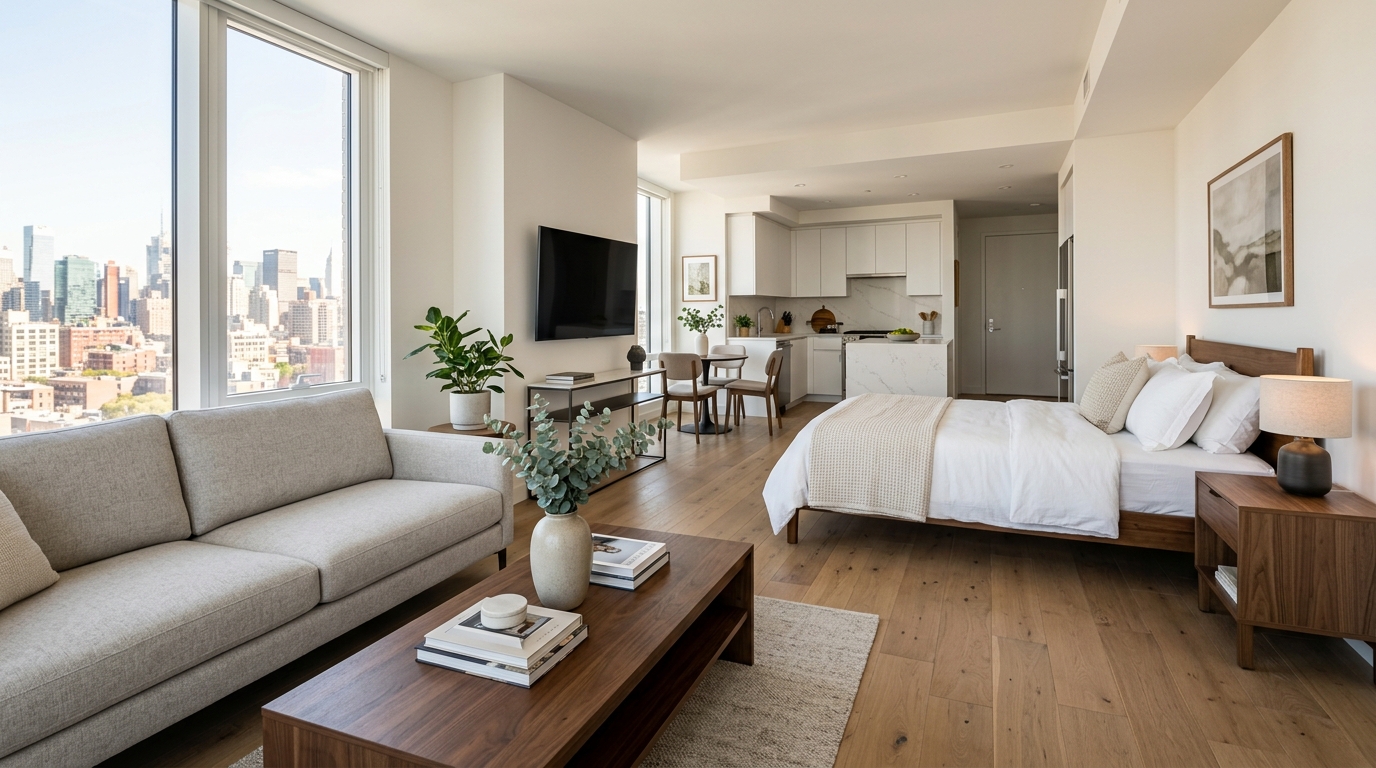
When it comes to virtual staging cost for a small apartment, the numbers in 2026 tell a compelling story—and if you're still relying on traditional physical staging for studio units, you may be leaving serious money on the table. Studio apartments present a unique challenge for real estate professionals: the spaces are compact, buyers and renters need to visualize how the square footage works, and yet the budget for marketing a $250,000 studio rarely justifies the same staging spend as a $1.2M single-family home. This is exactly where the traditional vs. AI staging debate becomes critical.
In this comprehensive cost breakdown, we compare every dimension of traditional staging against AI-powered virtual staging—from upfront costs and turnaround times to flexibility, quality, and ROI. Whether you're a real estate agent, property manager, or real estate photographer, this guide will help you make the smartest staging decision for studio apartments in 2026.
What Is Traditional Staging for Studio Apartments?
Traditional staging involves physically furnishing a property with rented or owned furniture, decor, and accessories to make it more visually appealing to prospective buyers or renters. For studio apartments, this typically means renting a bed frame, mattress, sofa, coffee table, rug, artwork, and kitchen accessories—all coordinated by a professional home stager.
The process involves a consultation, furniture sourcing, delivery, setup, and eventual removal. Stagers charge for their time, their furniture inventory (or rental fees), and transportation. In a studio apartment, even though the square footage is small, the per-square-foot cost of traditional staging can actually be higher than for larger homes because the minimum fees and logistics costs don't scale down proportionally.
Typical Traditional Staging Costs for a Studio in 2026
- Initial consultation fee: $150–$300
- Furniture rental (monthly): $300–$800 for a studio
- Delivery and setup: $200–$500
- Stager's design fee: $250–$600
- Removal/de-staging fee: $150–$300
- Total for a 30-day listing: $1,050–$2,500+
What Is AI Virtual Staging for Studio Apartments?
AI virtual staging uses artificial intelligence to digitally add furniture, decor, lighting effects, and design elements directly into property photographs. The result is a photorealistic, professionally staged image that can be produced in 15–30 seconds. Platforms like PropStage.ai allow real estate professionals to upload a photo of an empty or cluttered studio apartment and receive a fully staged, market-ready image almost instantly.
Typical AI Virtual Staging Costs for a Studio in 2026
- Per-image AI staging: $10–$30 per photo
- Full studio package (4–6 images): $40–$150
- Style revisions: Often included or minimal cost
- Turnaround time: 15 seconds to 5 minutes
- No furniture rental, delivery, or removal fees
- Total for a complete listing: $40–$150
Traditional vs AI Staging: Full Comparison Table
| Factor | Traditional Staging | AI Virtual Staging (PropStage.ai) |
|---|---|---|
| Average Cost (Studio) | $1,050–$2,500+ | $40–$150 |
| Turnaround Time | 3–7 days | 15–30 seconds |
| Style Flexibility | One style per staging | Unlimited variations |
| Physical Presence Required | Yes | No |
| Ongoing Monthly Cost | $300–$800/month | $0 after initial staging |
| Revisions | Costly and time-consuming | Fast and low-cost |
| Scalable for Multiple Listings | Expensive and slow | Instant and affordable |
| ROI for Studio Apartments | Moderate | High |
ROI Analysis: Which Method Wins for Studio Apartments?
Multiple industry studies consistently show that staged properties sell faster and for higher prices than unstaged ones. The National Association of Realtors reports that staged homes sell for 1–5% more than comparable unstaged properties. For a $250,000 studio, that's $2,500–$12,500 in additional sale price.
Staged homes spend 73% less time on the market than non-staged homes, regardless of whether staging is physical or virtual. — Real Estate Staging Association, 2025 Report
The Verdict
For the vast majority of studio apartment listings in 2026, AI virtual staging is the clear winner. The cost savings are dramatic—typically 90–95% less than traditional staging—while the quality, speed, and flexibility advantages make it the more practical and profitable choice for real estate professionals managing multiple listings.