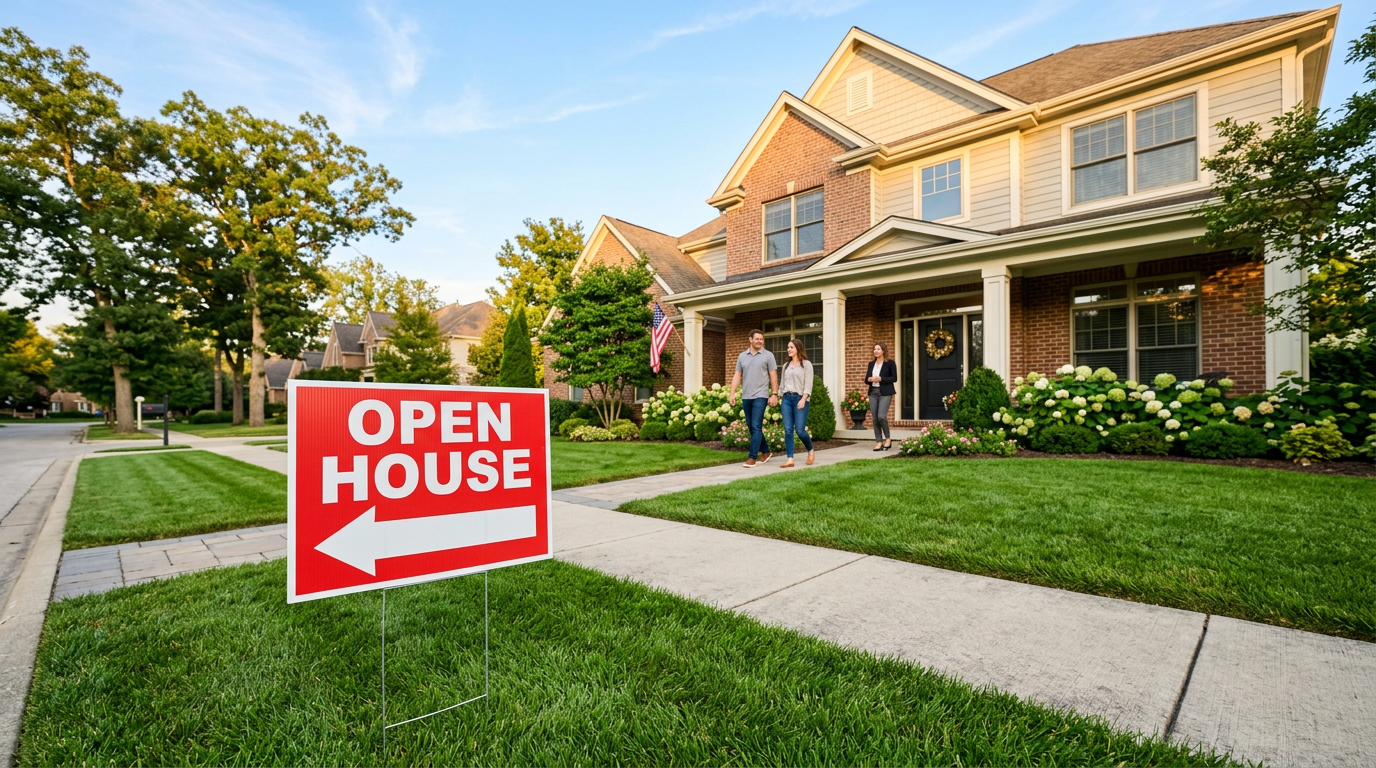
Open house signs design is one of the most underestimated tools in a real estate agent's marketing arsenal. While digital ads and MLS listings capture online attention, a well-designed physical sign is often the deciding factor for a buyer who is already driving through the neighborhood. Get the design right, and you can convert a casual drive-by into a serious walk-through. Get it wrong, and that potential buyer keeps driving. This guide walks you through every element of creating open house signs that genuinely work—from color psychology and typography to placement strategy and digital integration.
Before you even design your signs, pair them with irresistible listing photos. Use PropStage.ai's Open House Hero Shot Creator to transform any property photo into a magazine-quality image that reinforces your brand the moment a buyer scans your QR code.
Why Open House Signs Design Matters More Than You Think
Studies from the National Association of Realtors consistently show that a significant portion of open house visitors decide to attend on impulse—they were simply driving or walking by when a sign caught their eye. That means your signage is not supplementary marketing; it is primary marketing for a large segment of your potential audience. A poorly designed sign—faded colors, small text, missing arrows—doesn't just fail to attract buyers. It actively signals that the listing agent is inattentive to detail, which raises doubts about how well the property itself has been managed and presented.
Professional open house signs design communicates competence before a buyer ever sets foot inside the home. It sets the tone for the entire showing experience.
Step 1: Build a Three-Tier Sign System
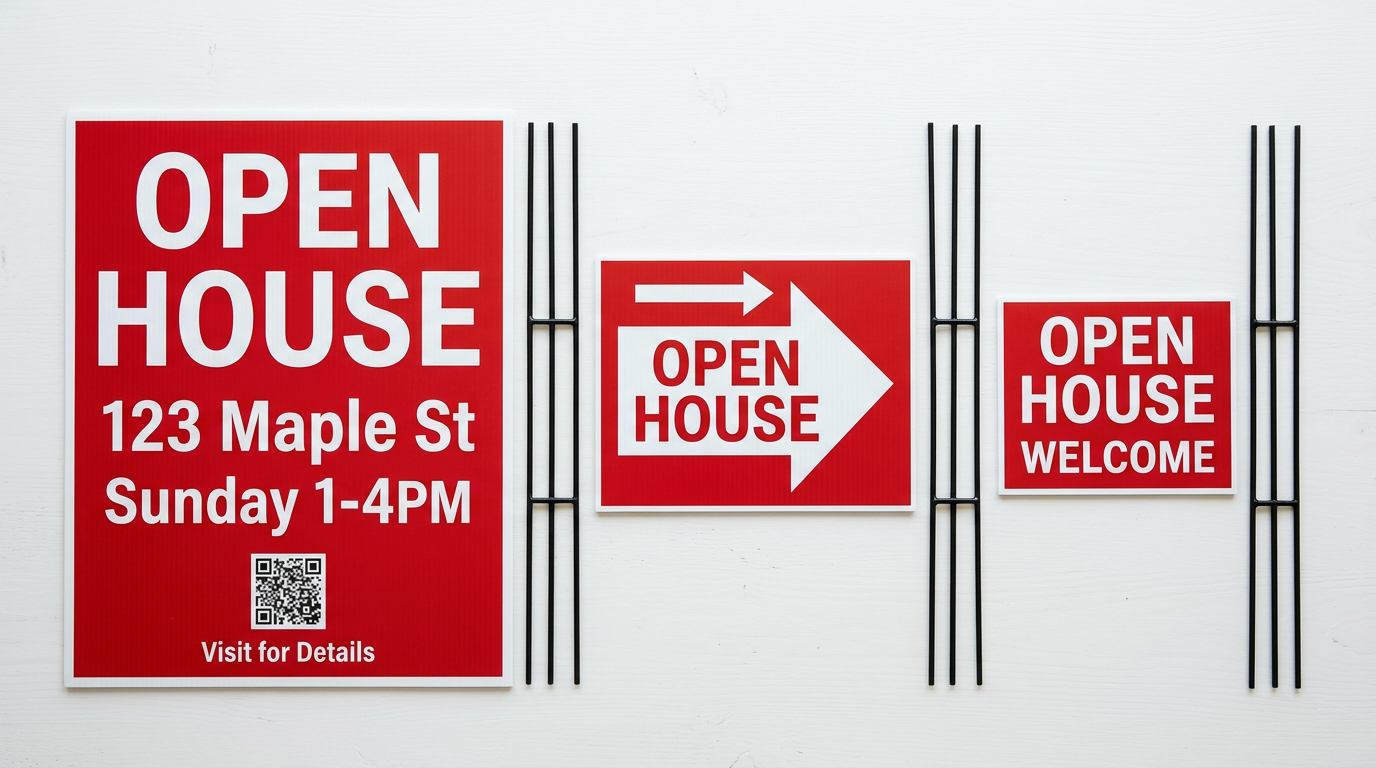
The most effective open house sign campaigns use a three-tier hierarchy. Each tier serves a distinct purpose in the buyer's journey from stranger to visitor.
- Announcement Signs: Placed at major intersections and high-traffic roads, these signs introduce the event. Include the address, date, time, and your brand or logo. This is where a QR code linking to your listing belongs.
- Directional Signs: Placed at every turn between the main road and the property. These signs should contain only an arrow and 'OPEN HOUSE'—nothing else. Simplicity ensures readability at driving speed.
- Arrival Sign: Positioned directly in front of or adjacent to the property. This sign confirms the buyer has arrived and should include the address, open house hours, and a welcoming visual element such as a balloons icon or a professional photo of the home's exterior.
Step 2: Master Color Psychology for Real Estate Signs
Color is the first thing the human eye processes at a distance, before text, before shape, before anything else. For open house signs design, high contrast is the non-negotiable foundation. The most readable combinations are:
| Background Color | Text Color | Best Use Case |
|---|---|---|
| Bright Red | White | High-energy markets, competitive neighborhoods |
| Navy Blue | White or Yellow | Luxury and premium listings |
| Black | Yellow or White | Modern, minimalist brand identities |
| White | Black or Dark Navy | Clean, professional look in upscale areas |
| Forest Green | White | Eco-friendly or suburban/rural properties |
Avoid gradients, multiple accent colors, or photographs as sign backgrounds. These elements reduce contrast and make text nearly impossible to read from a moving vehicle. Save the beautiful photography for your digital listing—speaking of which, if your exterior photos need a boost, the Blue Sky Replacement tool from PropStage.ai can instantly swap a dull overcast sky for a brilliant blue backdrop, making your QR-linked listing photos far more compelling.
Step 3: Typography Rules That Ensure Readability
Typography on open house signs follows a simple rule: if it requires effort to read, it will not be read. Drivers make split-second decisions. Your font must communicate instantly.
- Font Family: Use bold, sans-serif fonts such as Impact, Bebas Neue, or Montserrat Bold. Avoid script, serif, or decorative fonts entirely.
- Letter Height: Minimum 3 inches for directional signs. For announcement signs near fast-moving roads, aim for 4–5 inch letter height.
- Word Count: Five to seven words maximum per sign. 'OPEN HOUSE → Sunday 1–4PM' is perfect. Anything more dilutes the message.
- All Caps vs. Mixed Case: All caps work well for short phrases like 'OPEN HOUSE.' For longer text like addresses, mixed case improves readability.
- Spacing: Generous letter spacing (tracking) improves legibility at a distance. Tight, condensed text saves space but loses readers.
Step 4: Strategic Placement—The Route Mapping Method
Even a perfectly designed sign fails if it is placed in the wrong location. Before the open house, physically drive the route from the two or three nearest major intersections to the property. As you drive, note every point where a first-time visitor might hesitate or make a wrong turn. Each of those points needs a directional sign.
The 500-Foot Rule: In suburban and residential areas, place a directional sign every 500 to 1,000 feet along the route. In dense urban areas, place signs at every intersection. Never let more than two turns pass without a sign—buyers will assume they are lost and turn back.
Placement height matters too. Signs staked into the ground should have their text beginning at roughly 18–24 inches above the ground—visible over parked cars but not so high that they compete with tree canopies. On corners, angle signs at 45 degrees so they are readable from both directions of approaching traffic.
Step 5: Add Digital Integration with QR Codes
Modern open house signs design should bridge the physical and digital worlds. A QR code on your announcement sign allows buyers who slow down but do not stop—or who drive by before the open house begins—to access the full listing instantly. When they scan the code, they should land on a page featuring professional, staged photography that builds excitement and motivates them to return for the showing.
This is where your digital presentation becomes critical. If a buyer scans your QR code and sees dark, cluttered, or unstaged photos, the sign has done its job but the listing has lost the lead. Use PropStage.ai's AI Virtual Staging tool to ensure every room in your listing photos looks its absolute best—fully furnished, beautifully lit, and buyer-ready—before you print that QR code on your sign.
Step 6: Materials and Durability
The physical quality of your signs reflects directly on your brand. Crumpled, faded, or handwritten signs communicate carelessness. Invest in professional-grade materials that hold up through a full day of sun, wind, and occasional rain.
- Corrugated Plastic (Coroplast): The industry standard. Lightweight, weather-resistant, and affordable in bulk. Available in standard 18"x24" and 24"x36" sizes.
- Aluminum-Backed Signs: More expensive but extremely durable. Ideal for agents who reuse signs across many listings.
- Wire H-Stakes: Use heavy-gauge wire stakes (at least 9-gauge) that resist bending in wind. Flimsy stakes cause signs to lean or fall, making them unreadable.
- UV-Resistant Inks: Always specify UV-resistant printing to prevent fading during a full-day open house in direct sunlight.
- Laminated Inserts: If you use reusable sign frames, laminate your paper inserts for water resistance and a more professional finish.
Common Mistakes in Open House Signs Design
Even experienced agents make avoidable errors that reduce sign effectiveness. Here are the most common mistakes and how to correct them:
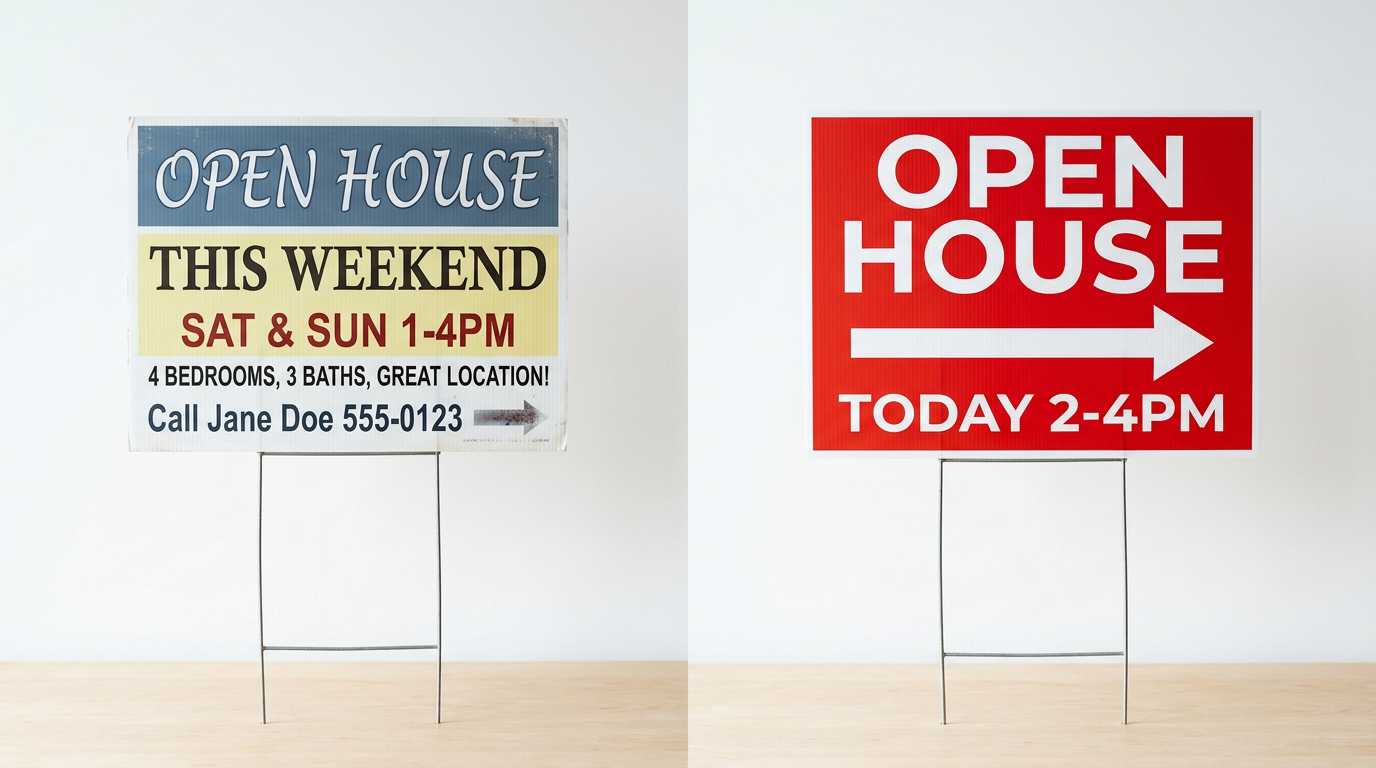
- Too much text: Agents try to include the address, price, agent name, phone number, and website on every sign. Keep directional signs to arrow + 'OPEN HOUSE' only.
- Inconsistent branding: Using different colors or fonts across your sign system creates visual confusion. Buyers may not realize all signs are leading to the same property.
- Placing signs too early: Signs placed days before the event get stolen, vandalized, or reported by neighbors. Place signs the morning of the open house.
- Forgetting to remove signs: Leaving signs up after the event is not only unprofessional—it is illegal in many municipalities and can result in fines.
- Ignoring local regulations: Many cities and HOAs have strict rules about sign placement, size, and duration. Always check local ordinances before placing signs on public property.
- Low-quality listing photos behind the QR code: Your sign drives traffic; your photos convert it. Pair every QR code with professionally staged images. Use the Listing Photo Declutter & Clean tool to remove clutter from photos before they go live.
Pro Tips for High-Converting Open House Sign Campaigns
- Use balloons strategically: A cluster of helium balloons on your arrival sign increases visibility and creates a festive, welcoming atmosphere. Use colors that match your sign palette.
- Test your route the day before: Drive the full route as a stranger would. If you hesitate anywhere, add a sign.
- Go vertical with riders: Attach a 'THIS WEEKEND' or 'TODAY 1–4PM' rider above your main announcement sign to create urgency.
- Photograph your sign placement: Document sign locations with your phone's GPS-enabled camera. If a sign goes missing, you can quickly identify where a replacement is needed.
- Coordinate with digital ads: Run targeted Facebook or Instagram ads to the same geographic area your physical signs cover. The combination of digital and physical touchpoints dramatically increases attendance.
- Create a consistent brand experience: Your signs, your listing photos, your social media posts, and your in-person presentation should all feel like one cohesive campaign.
Bringing It All Together: Signs Are Just the Beginning
A perfectly designed open house sign system gets buyers through the door. What keeps them engaged—and ultimately converts them into offers—is the quality of the property presentation they encounter once they arrive and the listing photos they browse on their phones while standing in the driveway. Every element of your marketing campaign needs to work in harmony.
PropStage.ai gives real estate professionals the tools to ensure that harmony. From hero shots that make your QR-linked listing irresistible, to virtually staged rooms that help buyers envision their future home, to exterior enhancements that make the property look its absolute best in every photo—the platform transforms your digital presentation in seconds. When your signs are professional, your photos are stunning, and your staging is immaculate, you are not just hosting an open house. You are creating a buying experience.
Ready to make your listing photos as compelling as your signs? Try the Open House Hero Shot Creator to generate magazine-quality exterior and interior shots that convert browsers into buyers the moment they scan your QR code.