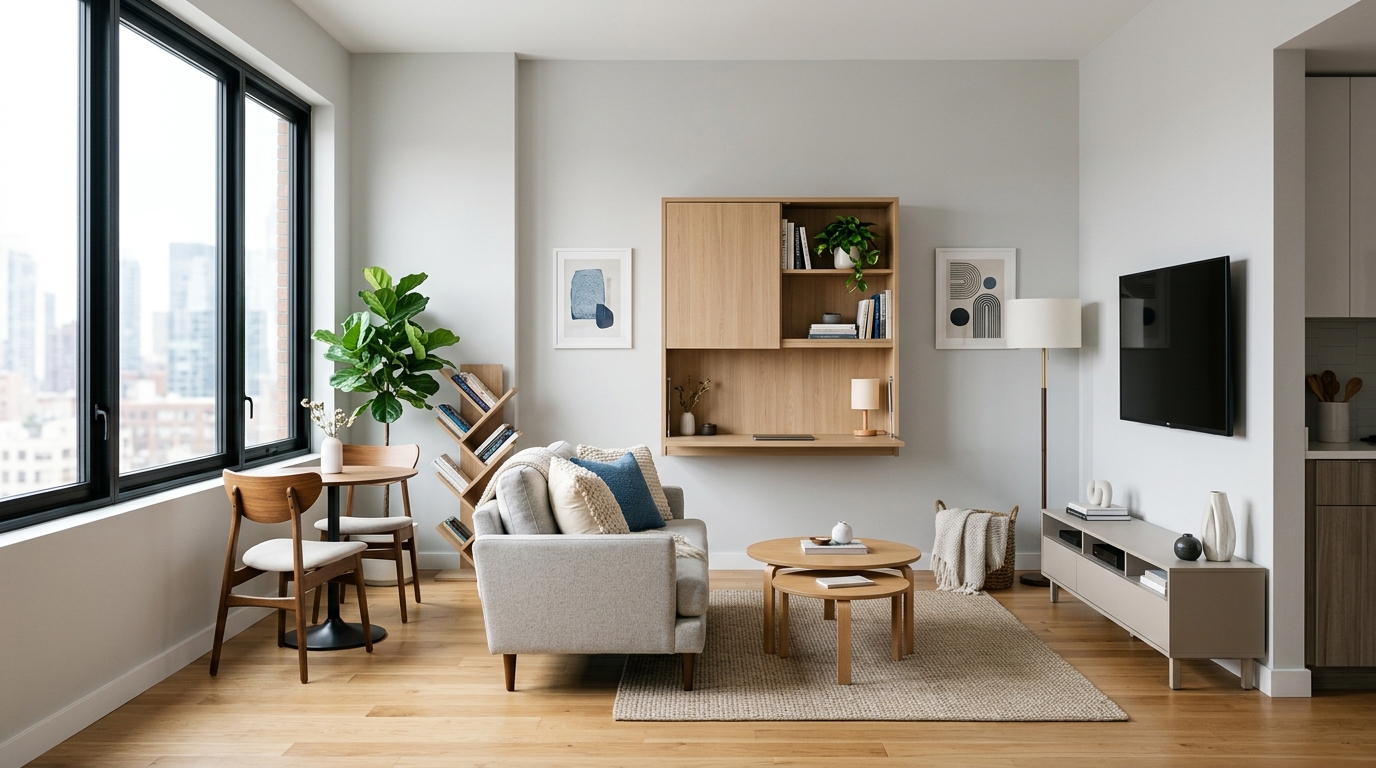
When it comes to selling a small apartment, the right small apartment furniture layout can be the difference between a listing that lingers on the market and one that attracts multiple offers in the first week. Buyers walking into a compact space are already making mental calculations—can I fit my life in here? The staging choices you make answer that question before they even open a closet. In this guide, we break down nine proven furniture layouts that maximize perceived space, improve flow, and help small apartments sell faster.
Pro Tip: Before you rearrange a single piece of furniture, use PropStage.ai's AI furniture visualizer to preview how different layouts and pieces will look in the space—saving you time, effort, and costly staging mistakes.
Why Furniture Layout Matters More Than Square Footage
Real estate professionals know that buyers don't fall in love with square footage—they fall in love with how a space feels. A 550-square-foot apartment staged with the right layout can feel more spacious and functional than a poorly arranged 750-square-foot unit. The furniture layout communicates livability, and livability drives offers. According to the National Association of Realtors, staged homes sell 88% faster and for up to 20% more than non-staged properties. For small apartments, the stakes are even higher.
1. The Floating Sofa Layout
One of the most common mistakes in small apartment staging is pushing all the furniture against the walls. Instead, float the sofa 12 to 18 inches away from the wall and angle it slightly toward the focal point. This creates depth, makes the room feel intentionally designed, and immediately reads as more spacious in listing photos.
2. The Single-Rug Zoning Strategy
In open-plan studio or one-bedroom apartments, defining zones is critical. A single, appropriately sized area rug under the living furniture anchors the seating area and visually separates it from the dining or sleeping zone—without adding walls, dividers, or visual clutter.
3. The Loveseat-Over-Sofa Swap
Scale is everything in compact spaces. Swapping a standard three-seat sofa for a stylish loveseat immediately opens up the room and improves traffic flow. Pair it with one or two accent chairs to maintain seating capacity while keeping the layout airy.
4. The Wall-Mounted TV Setup
Mounting the TV on the wall frees up floor space and creates a cleaner, more modern look. This layout trick also encourages a lower, leaner media console or floating shelf beneath the TV, which keeps sightlines open and makes the room feel taller.
5. The Bench-and-Round-Table Dining Setup
A round table with a bench tucked against the wall and two chairs on the open sides is a far more efficient arrangement than a rectangular table with four chairs. The round shape has no corners to navigate around, and the bench slides completely under the table when not in use.
6. The Console Table Room Divider
In studio apartments or open-plan layouts, a narrow console table placed behind the sofa serves double duty: it defines the boundary between the living and dining zones, and it provides a surface for lamps, plants, or decorative objects that add warmth and personality.
7. The Vertical Shelving Statement
Floor-to-ceiling shelving units draw the eye upward, making ceilings feel higher and rooms feel larger. In a small living room or home office nook, a tall bookcase styled with books, plants, and decorative objects creates a focal point that buyers find aspirational.
8. The Layered Lighting Layout
A layered lighting approach—combining overhead lighting, wall sconces, and table lamps on existing surfaces—eliminates the need for floor lamps entirely while creating a warm, inviting ambiance. This is particularly powerful for listing photography: well-lit rooms with multiple light sources photograph dramatically better than rooms relying on a single overhead fixture.
9. The Multi-Functional Bedroom Layout
Position the bed against the longest wall to maximize usable floor space on the sides and at the foot of the bed. Use nightstands with drawers rather than open-leg tables to maximize storage. A neatly staged bedroom with visible floor space on three sides of the bed signals a room that actually functions.
How to Apply These Layouts Without Physical Staging
Not every small apartment listing justifies the cost and logistics of physical staging. With PropStage.ai, you can apply any of these nine layout strategies to existing listing photos in 15 to 30 seconds. You can even use the Buyer Persona Staging tool to tailor the staging style to your specific target buyer, whether that's a young professional, a couple, or a remote-working executive.
Final Thoughts: Small Spaces, Big Opportunities
Small apartments represent one of the most competitive segments of the real estate market, and the agents and photographers who understand furniture layout have a measurable edge. The nine strategies outlined here are designed to help buyers see past square footage and imagine a life well-lived in the space. Combined with professional-quality virtual staging from PropStage.ai, these layouts can transform even the most challenging compact listing into a property that generates genuine buyer excitement.