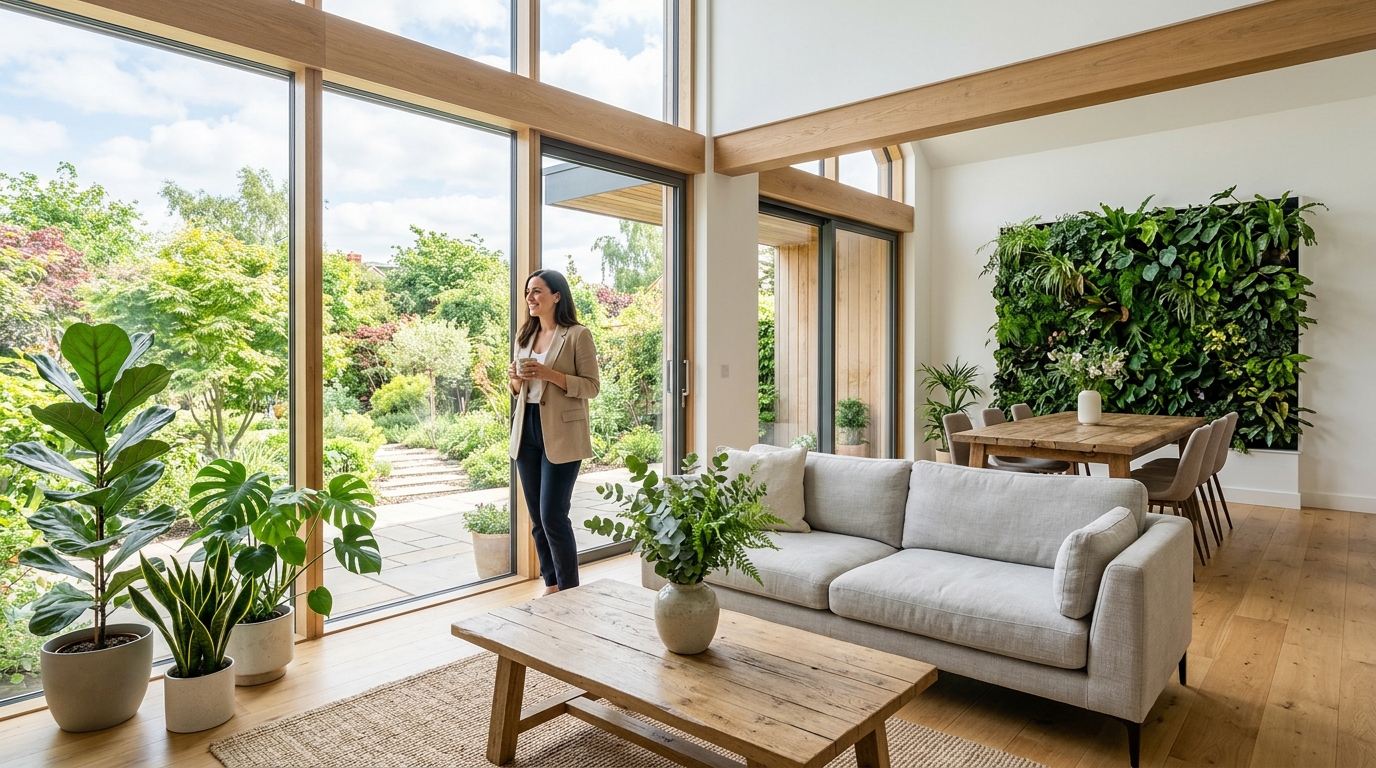
In 2026, biophilic design real estate isn't a niche concept reserved for eco-conscious architects—it's one of the most powerful sales tools available to real estate agents, property managers, and stagers. Properties that incorporate nature-inspired design principles are selling up to 47% faster than comparable listings, and buyers are willing to pay a premium for spaces that feel alive, calm, and connected to the natural world. If you're not staging with biophilic principles in mind, you're leaving significant time and money on the table.
This guide breaks down exactly what biophilic design means in a real estate context, why it works psychologically and neurologically, and—most importantly—how you can implement it across your listings using both physical staging strategies and AI-powered visualization tools like PropStage.ai's Buyer Persona Staging.
What Is Biophilic Design in Real Estate?
The term 'biophilia' was popularized by biologist E.O. Wilson in 1984 to describe humanity's innate need to connect with nature. In real estate and interior design, biophilic design translates this need into physical spaces: rooms that feature natural light, organic textures, living plants, water elements, earthy color palettes, and views of the outdoors.
Unlike a passing design trend, biophilic design is rooted in neuroscience. Studies from the University of Exeter and the WELL Building Institute consistently show that people in nature-connected environments experience lower cortisol levels, improved mood, and faster cognitive recovery. When buyers walk into a biophilically staged home, they feel better—often without knowing why. That emotional response directly influences purchasing decisions.
Biophilic staging doesn't require a complete renovation. Even small additions—a statement plant, a linen throw, a bowl of river stones—can shift the emotional tone of a room dramatically in both person and in listing photos.
The Data Behind the 47% Faster Sales Rate
The 47% faster sale statistic isn't pulled from thin air. A combination of research from the National Association of Realtors, Zillow's consumer sentiment data, and independent staging studies consistently shows that homes with strong nature-connected design elements—abundant natural light, greenery, natural material finishes—receive more online clicks, more in-person showings, and receive offers sooner than listings with conventional or sterile staging.
Zillow's 2025 Paint Color Analysis found that homes featuring nature-adjacent colors (sage green, warm terracotta, warm white) sold for up to $5,000 more than comparable homes with stark white or cool-toned walls. Meanwhile, listings featuring prominent indoor plants in hero photos averaged 31% more saves on major listing platforms compared to those without greenery.
Prerequisites: What You Need Before You Start
- High-quality listing photos: Biophilic staging lives and dies by photography.
- A clear buyer persona: Know your target buyer before choosing your design direction.
- Access to AI visualization tools: Test biophilic concepts virtually before committing to physical changes.
- A basic understanding of the property's existing natural assets: Identify what's already there and amplify it.
- A decluttered, clean baseline: Use the Listing Photo Declutter & Clean tool to create a clean canvas.
Step-by-Step: How to Apply Biophilic Design to Your Listings
Step 1: Audit Existing Natural Features
Begin every listing with a biophilic audit. Walk through the property and catalog every natural asset: exposed brick, wood beams, stone fireplaces, garden-facing windows, skylights, hardwood floors.
Step 2: Select a Nature-Inspired Color Palette
Use the Wall Color & Accent Wall Generator to visualize exactly how different nature-derived tones will look in the actual space before committing to paint.
Step 3: Layer Natural Textures and Materials
Introduce jute rugs, linen cushions, rattan furniture, reclaimed wood shelving, and stone surfaces. Use the Flooring Replacement Visualizer to show buyers how natural hardwood or stone tile would look.
Step 4: Introduce Statement Plants and Greenery
Use the Object Placement Tool to visualize exactly how different plant types and sizes will look in specific corners and surfaces of each room before investing in plant rentals.
Step 5: Optimize Natural Light in Every Photo
Use the 1-Click Listing-Ready Photo Editor to enhance brightness, warm color tones, and reduce harsh shadows after your shoot.
Step 6: Showcase Outdoor Connections
Convert daytime exterior shots into atmospheric twilight images using the Twilight Photo Converter to create an emotional connection to the property's natural surroundings.
Step 7: Generate Biophilic Staging Visuals with AI
PropStage.ai's Buyer Persona Staging tool allows you to generate fully staged room visuals tailored to specific buyer profiles with nature-inspired design elements optimized for their emotional triggers.
Common Mistakes to Avoid in Biophilic Staging
- Overdoing the greenery: Choose two or three statement plants and keep supporting greenery minimal.
- Using fake plants in photos: Artificial plants photograph poorly. Use real plants or AI-rendered greenery.
- Ignoring the smell: Diffuse subtle natural scents like cedarwood or eucalyptus for open houses.
- Clashing biophilic elements with incompatible styles: Maintain a coherent material story throughout the property.
- Neglecting the exterior: Use the Facade Makeover tool to visualize landscaping improvements.
- Using nature-inspired colors without considering light: Always test colors in the actual space using AI visualization.
Conclusion: Biophilic Design Is Your 2026 Competitive Edge
Biophilic design real estate strategy is no longer optional for agents who want to compete in 2026's market. Start with a biophilic audit, choose high-impact elements to introduce, and use AI visualization tools to show buyers the full potential of each space. Begin transforming your listings today with PropStage.ai's full suite of AI staging tools—and give your properties the nature-connected edge that closes deals faster.