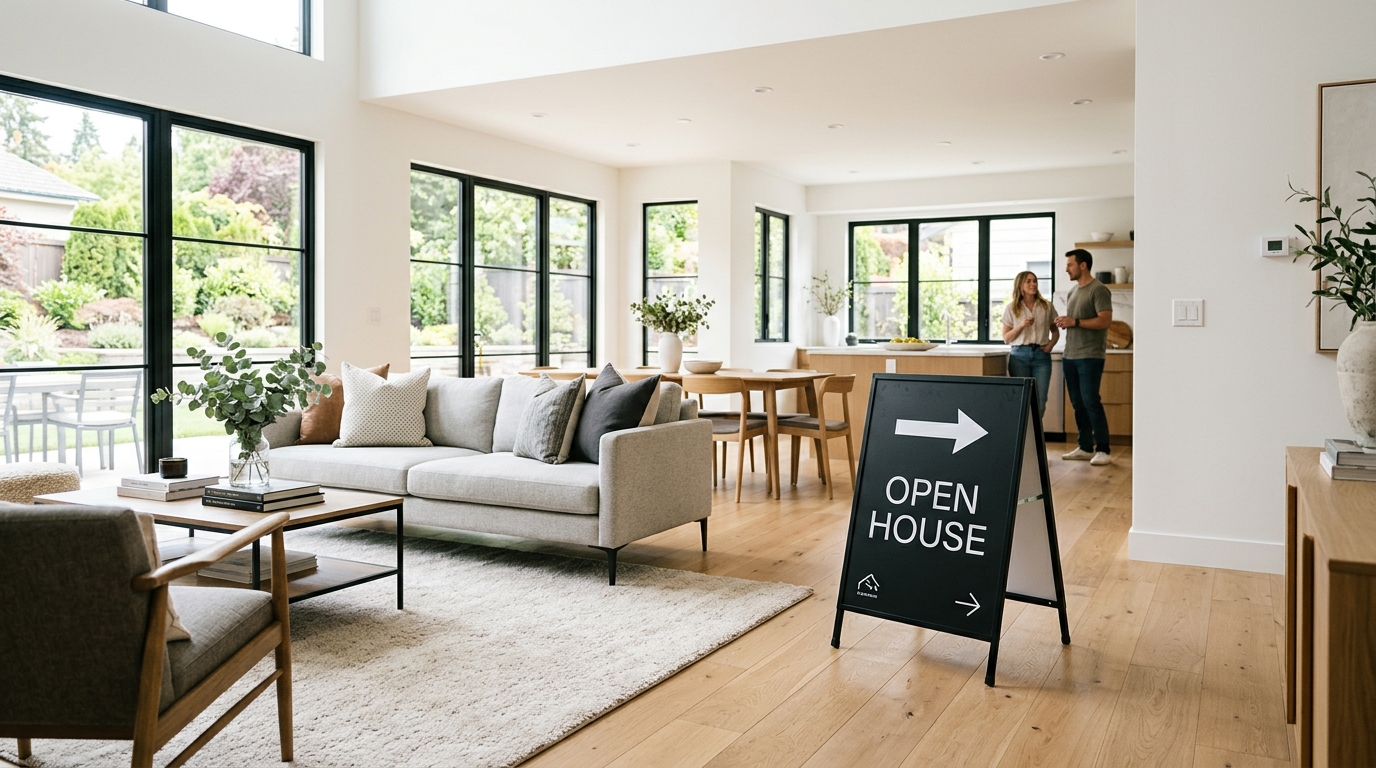
You've scheduled the open house, polished the listing, and sent the emails—but if buyers can't find the property, none of that preparation matters. Real estate directional signs are one of the most underutilized tools in an agent's open house playbook. When placed strategically, a well-designed rider system can funnel a steady stream of qualified buyers directly to your door, turning a quiet Sunday afternoon into a competitive showing environment. This guide walks you through every step of building a directional rider strategy that actually works.
Before you plant a single sign, make sure your listing photos are ready to impress. Use PropStage.ai's Open House Hero Shot Creator to transform any property photo into a magazine-quality image that matches the professional energy your signage creates on the street.
Why Real Estate Directional Signs Still Matter in a Digital World
In an era of Zillow alerts and Instagram ads, it's tempting to assume that physical signage is obsolete. The data says otherwise. Physical signs capture an audience that digital marketing simply can't reach: the spontaneous buyer already in the neighborhood, the neighbor who knows someone looking to move, and the curious drive-by prospect who wasn't actively searching but suddenly sees themselves in that home.
Directional riders serve a dual purpose. They guide pre-registered attendees unfamiliar with the neighborhood, and they intercept unplanned visitors who are already nearby. A single well-placed sign at a busy intersection can generate two to four additional walk-ins per open house.
What You Need Before You Start
- Directional rider signs (6–10 minimum): Use arrow-shaped riders or standard riders with printed arrows.
- H-wire stakes or sign frames: Ensure stakes are long enough to anchor securely.
- Zip ties or sign clips: For attaching riders to existing frames at intersections without grass.
- A printed or digital map of your placement route.
- Knowledge of local sign ordinances.
- A helper or assistant.
- Your listing's hero photo: Create a stunning version with PropStage.ai's 1-Click Listing-Ready Photo Editor.
Step-by-Step: Building Your Directional Rider Strategy
Step 1: Map Your Traffic Corridors
Open Google Maps and drop a pin on the property. Zoom out to a one-mile radius and identify the two or three most likely routes buyers would take. Look for major arterial roads, highway exits, and commercial corridors. These are your primary corridors—the roads from which all your directional sign chains will begin.
Step 2: Select Your 5–8 Key Intersections
Prioritize every decision point where a driver could go the wrong way: the first turn off the main arterial road, any confusing Y-intersections or roundabouts, the final street before the property, and any spot where the property itself is not yet visible.
Step 3: Design Clear, High-Impact Signs
Your directional riders need to communicate one thing instantly: which way to go. Use a large, bold directional arrow as the dominant element, your name or brokerage logo, the words 'OPEN HOUSE' in large type, and optionally the time. Avoid cluttering signs with the address.
Step 4: Sync Your Physical and Digital Presence
When a buyer sees your directional sign and looks up the listing on their phone, the listing photos need to match the quality and professionalism of your physical branding. Use the Listing Photo Declutter & Clean tool to remove clutter from interior shots. For exterior photos, the Twilight Photo Converter can transform a flat daytime shot into a glowing atmospheric image that stops scrollers in their tracks.
Step 5: Deploy Signs 1–2 Hours Before the Open House
The sweet spot is 60–90 minutes before the open house begins. Start at the farthest sign location and work your way inward toward the property. As you place each sign, verify the arrow direction from a driver's perspective.
Step 6: Monitor and Adjust Mid-Event
Assign someone to drive the route 30 minutes after the open house begins. Wind, foot traffic, and other agents' signs can knock your riders out of position. A quick 15-minute drive-through check can catch and correct issues before they cost you walk-in traffic.
Step 7: Remove All Signs Promptly
Remove every directional rider within one hour of closing. Leaving signs up overnight can result in fines in many municipalities and signals a lack of professionalism to the community you're trying to impress.
Pro Tips for Maximizing Your Directional Sign Impact
| Challenge | Pro Solution |
|---|---|
| No grass at key intersections | Use a weighted A-frame or attach rider to a utility box with zip ties (where permitted) |
| Competing open houses on the same street | Use a distinctive color scheme so buyers can follow YOUR sign chain exclusively |
| Signs keep falling over | Use longer H-wire stakes (at least 18 inches) and push them in at a slight forward angle |
| Low-light or overcast conditions | Choose high-contrast colors (yellow/black or red/white) and consider reflective vinyl printing |
| HOA restrictions on signs | Place signs just outside the HOA boundary on public right-of-way; confirm local ordinances first |
Create a branded open house welcome poster for the property entrance. PropStage.ai's Open House Welcome & Sign-In Poster tool generates professional, print-ready welcome signage in seconds.
Combining Directional Signs with a Complete Open House Marketing System
The most successful open houses treat directional riders as one component of a larger, integrated marketing system. To build hype before the event, use PropStage.ai's "Coming Soon" Sneak Peek Teaser tool to create mystery and anticipation around the listing on social media. A frosted or blurred teaser image posted 48–72 hours before the open house drives engagement and primes your audience so that when your directional signs go up on Sunday morning, buyers are already eager to attend.
Conclusion: Signs Are the Start—Your Listing Visuals Are the Close
A smart directional rider strategy is one of the highest-ROI investments you can make for an open house. Signs get buyers to the door. What they see when they arrive—both in person and on their phones—determines whether they fall in love with the property. With PropStage.ai's suite of AI-powered tools, you can polish listing photos, stage empty rooms, declutter interiors, and create stunning marketing materials in seconds—giving buyers every reason to walk through that door and make an offer.