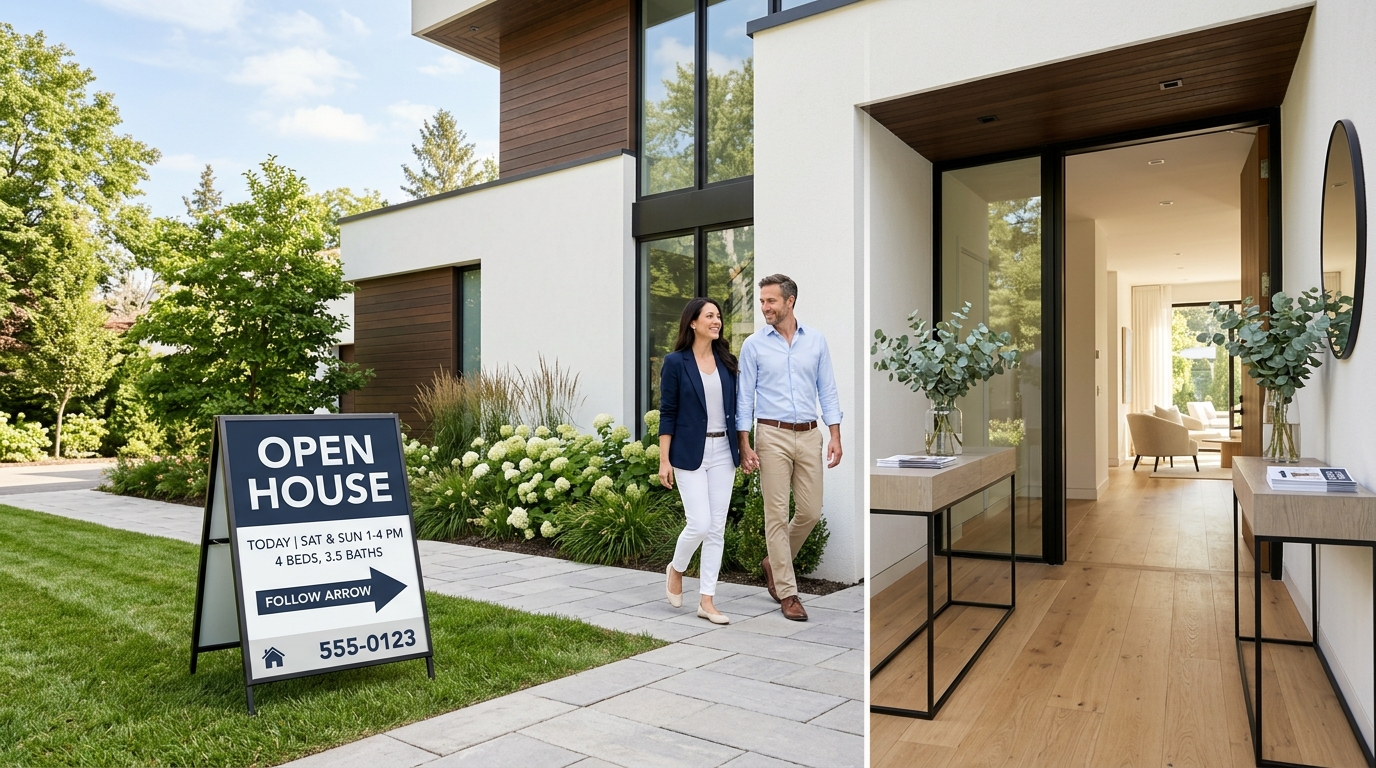
You've priced the home competitively, prepared the property, and scheduled the event—but if your open house sign design fails to stop traffic, none of that preparation matters. Signs are the first physical touchpoint between your listing and a potential buyer, and in a world of digital noise, a well-designed, strategically placed sign can be the difference between a packed open house and an empty one. This guide walks you through everything you need to know to design, place, and leverage open house signage that genuinely converts drive-by curiosity into signed offers.
Why Open House Sign Design Still Matters in a Digital World
With online listings, social media ads, and email campaigns dominating real estate marketing, it's tempting to treat physical signage as an afterthought. That would be a costly mistake. Studies consistently show that a significant percentage of buyers who visit open houses first noticed the property through drive-by signage—not online. Neighbors who become referral sources, buyers who weren't actively searching but were casually driving through a desirable neighborhood, and relocating families exploring areas on a weekend drive all represent traffic that only signs can capture.
Effective signage also amplifies your digital marketing. When a passerby sees a compelling sign, they often search the address online immediately. That's why pairing great signage with great listing photos is so powerful. Before your open house, use PropStage.ai's 1-Click Listing-Ready Photo Editor to ensure every photo on your listing page is polished, bright, and buyer-ready the moment that curious neighbor pulls up your listing on their phone.
Prerequisites: What You Need Before You Design a Single Sign
- A confirmed open house date, time window, and property address
- Your brokerage's branding guidelines (colors, fonts, logo files)
- A mapped driving route from the nearest major roads to the property
- A count of turns buyers must make—each turn needs at least one sign
- A budget for sign quantity (plan for a minimum of 8–12 signs for a typical suburban listing)
- Professional listing photos ready to link to from your QR code
- Permission from local authorities or HOA if required for sign placement
Step 1: Map Your Traffic Before You Design Anything
Great sign design starts with strategy, not aesthetics. Open Google Maps or drive the neighborhood yourself and identify every major road within a one-mile radius that feeds traffic toward the property. Mark every intersection where a buyer would need to turn. These are your critical sign locations. For a typical suburban home, you'll want signs on the nearest arterial road, at each turn, and a final 'You're Here' sign in front of the property itself.
Step 2: Design for Visibility First, Branding Second
The cardinal rule of open house sign design is that a sign no one can read is a sign that doesn't exist. Choose high-contrast color combinations—yellow/black, red/white, or navy/white—and use a bold sans-serif font at a minimum 3-inch letter height. Limit each directional sign to five words or fewer, and make your directional arrow large and unambiguous.
Step 3: Write Copy That Creates Urgency
Use phrases that create urgency and curiosity: 'Open Today 1–4 PM,' 'Just Reduced—Open Sunday,' or 'Move-In Ready—Open Now.' Add a one-line teaser on your primary sign highlighting the home's strongest selling point—'4BR with Pool' or 'Renovated Kitchen'—to attract the right buyers instantly.
Step 4: Bridge the Physical and Digital Experience
A QR code on your primary sign lets drive-by prospects save the listing for later. When they scan it, they should land on a page with stunning visuals. Use PropStage.ai's Dining Room Virtual Staging to add elegant furniture to empty spaces, and the Wall Color & Accent Wall Generator to show buyers the home's full potential.
Step 5: Place Signs Like a Pro
Place the first directional sign 500–1,000 feet before each turn, add a confirmation sign after each turn, and keep all signs at eye level (36–48 inches). Angle signs toward approaching traffic and ensure they won't be blocked by parked cars or landscaping.
Step 6: Maximize Your Open House Marketing Ecosystem
Build pre-event buzz with PropStage.ai's 'Coming Soon' Sneak Peek Teaser and targeted Instagram Story Ads. On event day, welcome visitors with a professional Open House Welcome & Sign-In Poster that reinforces your brand and captures contact information.
Common Open House Sign Mistakes to Avoid
- Too much text — Cut everything non-essential.
- Low contrast colors — Test your design against green grass and gray pavement.
- Inconsistent branding — Mixing styles looks unprofessional.
- Missing the last turn — Buyers will overshoot and give up.
- Placing signs too late — Put signs out the morning of the event.
- Ignoring local rules — Check local ordinances before placing signs.
- Leaving signs up after the event — Remove all signs within 24 hours.
Conclusion: Signs Are Just the Beginning
Mastering open house sign design is about understanding that signs are an invitation—not a guarantee. They get buyers to the door. What happens when they arrive, and what they see when they scan your QR code, determines whether curiosity becomes an offer. PropStage.ai makes it easy to ensure every room photo is polished and every listing looks its absolute best. Start with the Real Estate Photo Fix — All in One tool and give your open house the professional foundation it deserves.